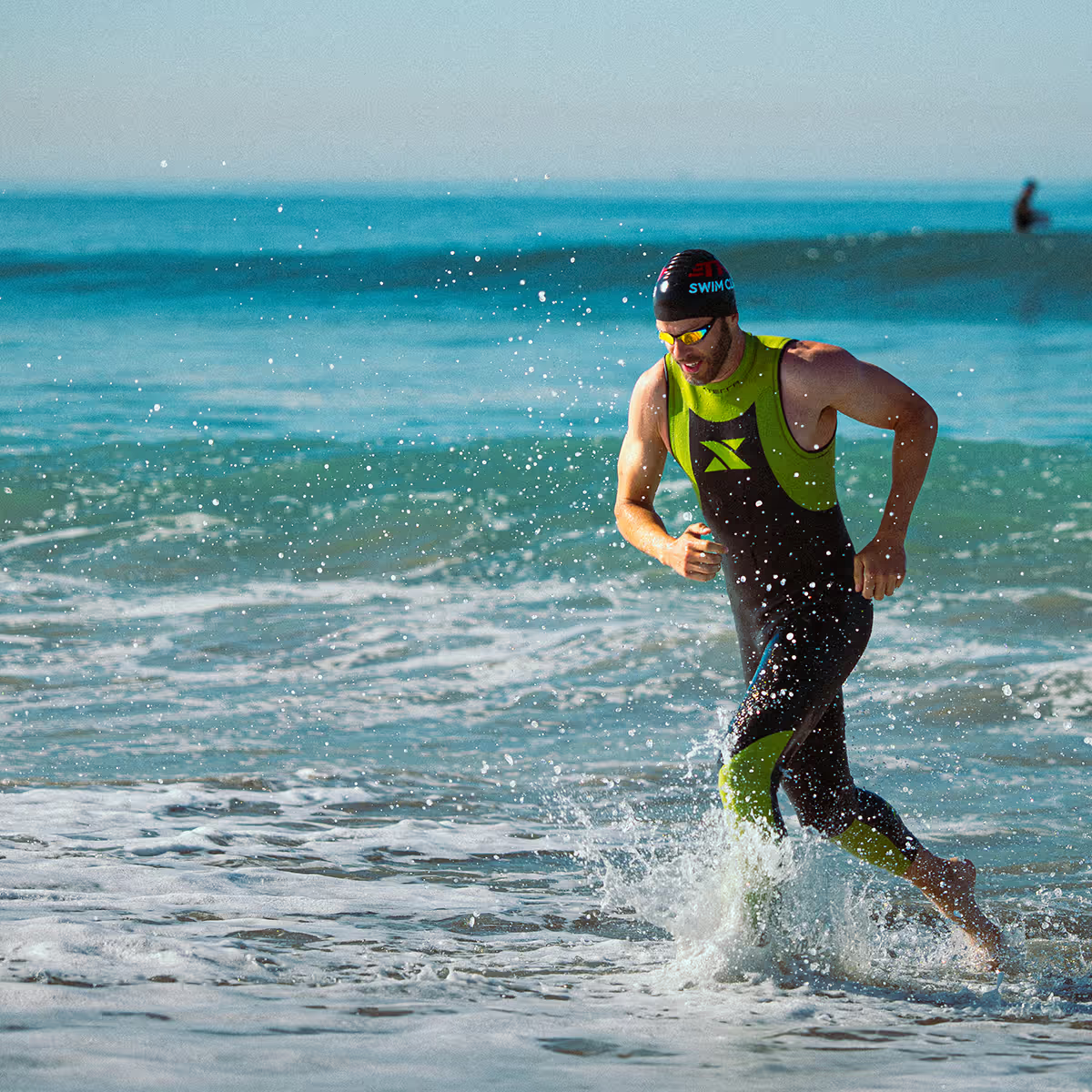
Open Water Swimming: The Triathlete's Guide
Most triathletes get in open water and swim 30 minutes straight because there’s no wall. Coach Ziggy explains why that’s a mistake, and how to bring real structure, speed work, and safety to every open water swim.


Watch a group of triathletes get in open water for the first time all season and you'll see the same thing happen almost every time.
They wade in, adjust their goggles, push off, and start swimming. And then they just keep swimming. Ten minutes. Twenty minutes. Thirty minutes of steady, straight-ahead freestyle at one comfortable speed, because there's no wall to stop at, so it must be time to swim without stopping.
They climb out tired and a little proud, and they haven't trained much of anything.
Open water swimming has a reputation for being a whole different sport. It isn't. The water is darker, the walls are gone, and the bottom might be a long way down, but the way you train in it is a lot closer to the pool than most triathletes think. And once you see it that way, open water stops being the scary, unstructured part of your week and becomes one of the most valuable sessions you do.
Is Open Water Swimming Different From Pool Swimming?
Yes and no.
The stroke is the same. Your breathing, your kick, your body position, and your catch all come with you from the pool. What changes is everything around them. There's no black line to follow. There's no wall every 25 meters to rest on, push off from, or count laps by. You might have chop, current, cold water, and a few hundred other swimmers. And you can't see where you're going unless you lift your head and look.
So open water asks for a few extra skills on top of your normal swimming: sighting, swimming straight, run or floating starts, buoy turns, and staying calm when things get messy. That's what open water training is for. Not for proving you can swim for half an hour without stopping.
Do I Need To Swim Nonstop In Open Water?
No. This is the biggest mistake I see.
Triathletes get in open water and think, "There's no wall to rest on, so I'm going to swim 30 minutes straight." It feels like the right thing to do. It feels like race practice. But think about what you'd get from swimming 30 minutes straight at one easy pace in the pool. Not much. You'd be practicing one speed, the slow one. I call that junk yardage, and doing it in a lake doesn't make it any less junk.
Open water workouts don't need to be that different from pool workouts. You can still do speed work. You can still do race pace. You can still do intervals with planned rest. Everything that makes your pool training work still works out there. You just have to get a little creative with how you set it up.
How Do You Rest In Open Water?
This is the question that stops most people, and the answer is simpler than you think. You don't need a wall to rest. You just need a way to stop for a few seconds and get your breath back.
You've got a few options:
Tread water. Stop, keep your head up, and tread for your rest. It's the simplest option and it works anywhere.
Float on your back. Roll over, relax, and let your heart rate come down. This is a great one for newer open water swimmers, because learning that you can stop and float anytime takes a lot of the fear out of deep water. The key is to spread your arms and legs wide like a starfish. Spreading out balances your body around your lungs, so your legs stay up and your face stays out of the water. When you bunch up, with your arms by your sides and your legs together, your legs drop, your body tips, and it's a lot harder to stay on your back.
Use a dock or a buoy. If there's a dock, a swim platform, a moored buoy you're allowed to hold, or your own float, swim to it and rest there. It's the closest thing to a pool wall you'll find.
Out and backs from the beach. Swim out, turn around, and swim back to shore. You can stand up in shallow water between reps and rest there, just like the end of a lane.
Any of these lets you do real interval training in open water. Swim hard, rest, and go again. Here's why that structure matters so much in get faster with interval training.
How Do I Measure Distance In Open Water?
If you have a measured course, like a set of buoys at a known distance, you can swim intervals exactly like you do in the pool. A set like 4x100m with rest between each one works just as well in a lake as it does in a lane.
If you don't have a measured course, swim by time instead. Take your 100-meter pace for the effort you want and use that as your interval. If your pace is about 1:30 per 100, then 4x1:30 of swimming is roughly the same set as 4x100m. Swim hard for 1:30, rest, and go again. You don't need to know exactly how far you went. You need to know you swam at the right effort for the right amount of time.
Your watch can help here too, but don't let it run the session. Open water GPS is a lot better than it used to be, and it's still not perfect. Time and effort are all you really need.
What Should An Open Water Workout Include?
It all depends on your setup and what's available to you. A calm lake with a dock is a completely different playground from an ocean beach with waves. Use what you have. But in most places, you can work on some version of all of these.
Speed work. Short, fast efforts with plenty of rest, just like the pool. Speed is what makes race pace feel easy, and open water is a great place to practice going hard and then settling down. More on that in the true cost of skipping speed work.
Race pace. 50s, 100s, or 200s at the pace you plan to race at, with short rest. This is where you learn what your race effort feels like without a pace clock on the wall.
Starts and entries. Practice the way your race starts. If it's a beach start, practice running in, getting through the shallow water, diving under waves if there are any, and getting into your stroke. If it's a deep-water or floating start, practice going from treading water to full speed. The first minute of a race is where a lot of swims go wrong, and you can practice it.
Buoy turns. If you have a buoy, practice turning around it. Swimming up to it, getting around it tight, and getting back to your rhythm on the other side is a skill, and it's one of the places where races get crowded and messy.
Sighting. Every few breaths, lift your eyes just above the surface to look ahead, then turn your head to breathe like normal. Keep it quick and keep your head low, because lifting your whole head drops your legs. I wrote about that teeter-totter in why do my legs sink when I swim. Pick something big and easy to see, like a building, a tree, or a buoy, and practice swimming straight at it. Most triathletes swim a lot farther than the course in a race simply because they zigzag.
Swimming with others. If you train with a partner or a group, swim side by side and right behind each other. Getting comfortable with someone's feet in front of you and an arm next to you takes a lot of the shock out of race day. And swimming right on someone's feet, called drafting, saves you real energy.
What Does An Open Water Workout Look Like?
Here's an example for a lake or a calm beach, with no measured course. Adjust it to what you have.
Warm-up:
- 5 minutes easy, sighting every few breaths
Pre-set:
- 4x1:30 moderate, with :30 rest treading water or floating on your back
- 4x beach or floating starts: 10 fast strokes, then swim easy back to the start and rest :30
Main set, 3 rounds:
- 4x1:30 strong, with :20 rest treading water or floating on your back
- 4x1:00 at race pace, with :10 rest
- 1x1:00 easy, with 1:00 rest
Cool-down:
- 5 minutes easy
That's a real workout. You practiced speed, race pace, starts, and sighting, all in a little over an hour. Compare that to 30 minutes of nonstop swimming at one speed and it's not even close.
How Do I Stay Safe Swimming In Open Water?
Open water is a lot of fun, and it deserves respect. Most of staying safe comes down to a few simple habits.
Never swim alone. Always swim with a partner. Even strong swimmers get cramps, get stung by jellyfish, swallow water, or get caught off guard by conditions. Having someone with you, or someone watching from shore or a boat, matters.
Wear a bright swim cap. Orange, pink, yellow, whatever you've got that stands out. A dark cap in dark water is almost impossible to see from a boat, a paddleboard, or the beach.
Use a swim buoy. Wear a tow float, the bright inflatable buoy that clips around your waist and trails behind you. It makes you visible, and if you need to stop and rest, you've got something to hold on to. It doesn't slow you down much, and it should be part of every open water swim you do.
Stay in the swim zone. If you're in the ocean, swim inside the marked swim area at the beach, where there are no boats, and near a lifeguard when you can. Boats and jet skis can't see you well, and they shouldn't have to look for you.
Know your water. Lakes and oceans are different. In the ocean, check the conditions before you go and pay attention to waves, currents, and rip currents. In a lake, know where it gets deep and where boats go. Whatever kind of water you're in, start close to shore until you know it well.
How Often Should I Swim In Open Water?
For most triathletes, once a month during your build is a great habit, and two or three times a month in the last six to eight weeks before a race is ideal. I go into the details for each distance in how much do I need to swim for a 70.3 and how to train for an Ironman swim.
And if open water isn't available where you live for part of the year, that's fine. The pool is where most of your fitness gets built anyway. In fact, doing too much open water swimming is often a mistake. It can build bad habits into your technique, like looking forward instead of down, which wrecks your body position. Use your open water sessions for what the pool can't give you: sighting, starts, turns, and getting comfortable without a wall or a line. But keep your main training sessions in a controlled environment.
What About Wetsuits?
Wear one if your race is wetsuit legal, and practice in it before race day. A wetsuit adds buoyancy and makes you faster, which is exactly why you need to know how it feels before the gun goes off.
Just don't let it become a crutch. A wetsuit floats your legs and hides a lot of problems in your stroke, and some races are too warm to wear one. I wrote about that in beware of the wetsuit.
The Whole Point
Open water isn't a different sport. It's the same swimming, with a few new skills and a lot less structure handed to you. The structure is still your job.
So next time you're standing at the edge of a lake or a beach, don't push off and swim until you're tired. Bring a workout. Treat the dock like a wall and the beach like the end of a lane. Swim fast, rest, sight, turn, and do it again.
The triathletes who are calm on race morning aren't the ones who swam the farthest in open water. They're the ones who practiced the race in it.
Ready to see real progress in the water?
Follow structured weekly sessions that steadily build speed, endurance, and race control.
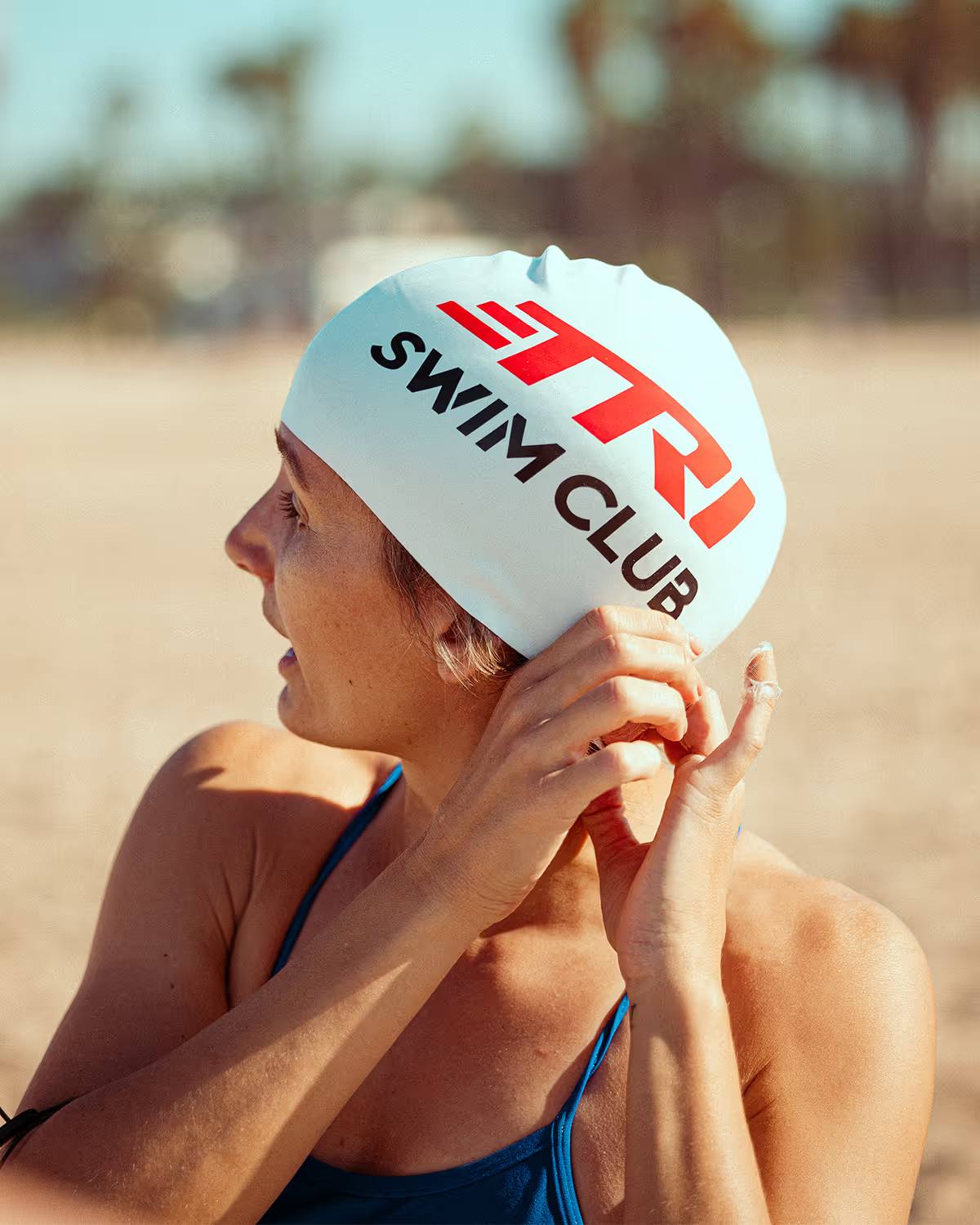
New to structured swim training?
Build confidence, improve technique, and double your distance before you join the TRI Swim Club.
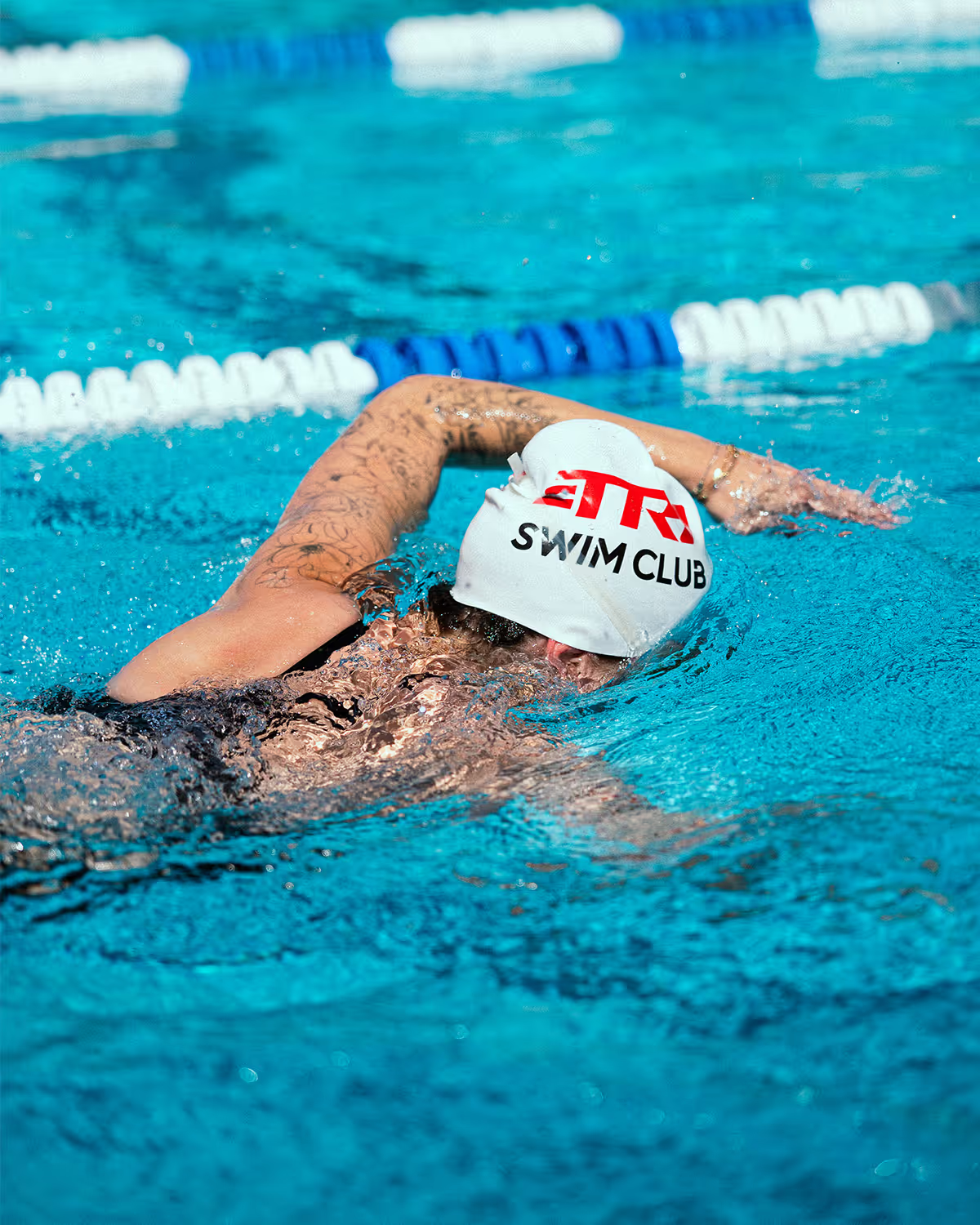
Chasing podiums or performance goals?
Train with elite-level structure scaled to your ability with 1:1 coaching to compete at your highest level.