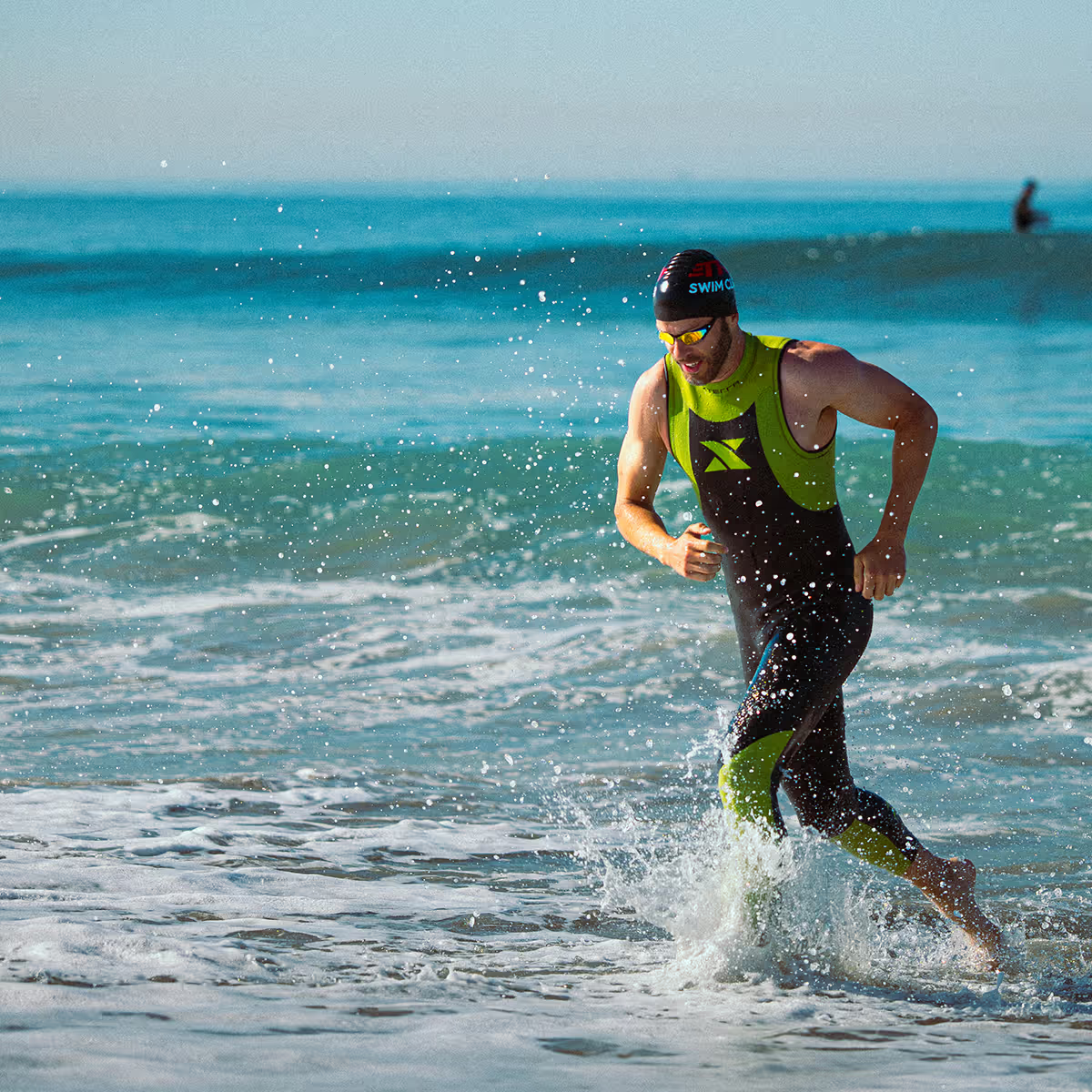
Beware of the Wetsuit
A wetsuit makes almost anyone feel like a great swimmer, and that's exactly the problem. It doesn't fix your stroke, it hides it, until the neoprene comes off on the worst possible morning. Here's how to build a swim that's already fast before you ever zip up.

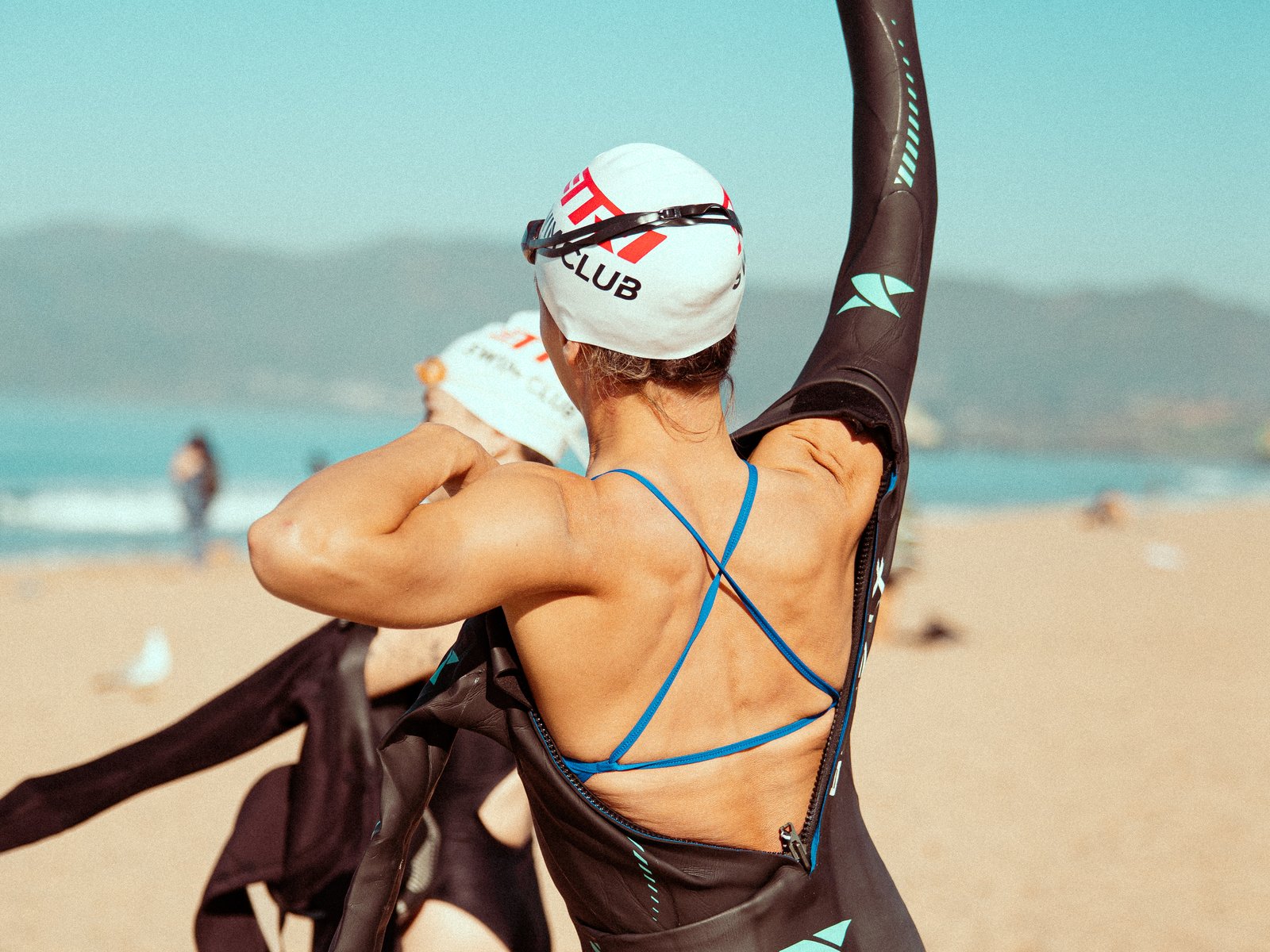
A wetsuit will make almost anyone feel like a great swimmer. And that, it turns out, is exactly the problem.
Think about what happens the first time you put one on. You hit the water and you're floating higher than you ever have in your life. Your legs, which normally hang somewhere down around your knees dragging like a boat anchor, suddenly pop right up to the surface. You glide. You feel fast. You feel like you finally, secretly, all along, were actually good at this. And on race day, great, enjoy it, the suit really is handing you free speed.
But here's the catch, and it's a big one. That lovely floaty feeling is a liar. The wetsuit isn't fixing anything about how you swim. It's just hiding it. Under all that neoprene your head is still riding too high and burying your hips. Your core still isn't engaged, so you're wiggling down the lane instead of rotating cleanly onto each stroke. Your kick is still a mess, either dragging along uselessly or splaying out wide and hitting the brakes. None of that went anywhere. The suit just floated it up out of sight, like shoving a pile of junk under the bed thirty seconds before the guests arrive. It looks handled. It is not handled. And one day the neoprene comes off, and there's the whole mess, exactly where you left it.
It's A Trap
And here's the real trap, the one almost every triathlete walks straight into. It isn't just that the wetsuit hides the problem. It's that hiding the problem removes your reason to ever fix it. The suit feels like progress, so you stop chasing the real thing. Why grind away at your body position and your kick when you can just zip on a layer of neoprene and instantly swim faster? So you don't. You buy the suit, you feel like a torpedo, and you file "learn to actually swim" under someday.
So here's how it goes. You show up to your first open-water swim of the season, zip into the suit, and it's glorious. You're higher in the water than you've ever been. Your legs, which usually feel like they're towing a bucket, are right up at the surface where they belong. You swim what feels like the fastest, easiest swim of your life, and you climb out grinning. This is it. Something finally clicked. You text your training partner that the swim is coming together. You start to think maybe you were never really that bad in the water after all.
Picking Only Cold Water Races
And that grin is exactly the problem, because it convinces you the swim is handled. Not fixed, just handled. So you do what most triathletes do once the wetsuit has papered over the cracks: you stop training the swim. Why spend three hard mornings a week in the pool when the suit already floats you around the course? Some athletes skip swim training almost entirely and just tell themselves the wetsuit will bail them out on race day. Others get cleverer about it and only ever sign up for wetsuit-legal races, arranging their whole season around water cold enough to hide the problem. Either way, nobody's fixing anything. They've decided the swim is a leak to be managed, not a skill to be built, and the wetsuit is the bucket they bail with.
And then, eventually, the tide goes out. Maybe the race you trained all year for comes in warm and the officials call it swim-skin legal, no wetsuits allowed. Maybe you finally chase a bigger goal and the race that matters just happens to be non-wetsuit. Or maybe nothing dramatic happens at all, and you just wake up three seasons in and realize your bike has gotten faster, your run has gotten faster, and your swim is exactly where it was the day you bought the suit. However it arrives, the moment is always the same. The neoprene comes off, and there's your old swimming waiting for you, untouched, exactly as broken as the day you decided to stop fixing it. The high head, the sinking hips, the dragging kick. All of it, right where you left it. Except now it's race morning, and you're standing on the beach with no bucket to bail with.
The Alternative
So what should you have been doing instead? Using the wetsuit the opposite of how most people do.
Here's your reframe. The wetsuit isn't the enemy. It's a wonderful thing on race day, free speed you'd be a fool not to take. The mistake is relying on it to give you the time you should be earning yourself. So flip it around. Put your work in the pool, in nothing but a swimsuit, where you can feel your legs sinking and your kick failing right there in plain sight, and actually do something about it.
Fix The Three Things Holding You Back
And it all starts at the top, with your head, because almost everything wrong downstream is being caused up there. Most people swim looking forward, like they're watching where they're going. Don't. Look straight down at the bottom of the pool. Think about making the back of your neck long and flat, chin tucked just slightly, so the wrinkles form in the front of your neck instead of the back, like you're making a bit of a double chin. It feels strange at first, like you're burying your face, but here's the magic of it: the body is a seesaw. Press the head down and the hips and legs come up on their own, no effort required. Half the sinking-legs problem in the world gets solved by the head alone.
Your core is what holds the rest of it together. Engage your middle and press your chest into the water just slightly, and your hips ride up to the surface and stay there. But the core isn't just about staying flat, it's also where your rotation comes from, and this is the part people botch. Every stroke should start from the hips, turning you onto your side, and then the shoulder and the catch follow. Most triathletes do it backwards, throwing the shoulder first and letting the torso wiggle side to side to keep up. Hips first. That's the difference between a body that slices down the lane in a clean line and one that snakes all over it bleeding speed.
Then there's the kick, and the whole secret is small and tight. It comes from the hips, not the knees, a compact little flutter rather than a big bend-and-snap of the leg. The cue I give people is to kick as if your feet have to stay inside a bucket. If they're splaying out wide or your knees are bending big, that kick isn't pushing you forward, it's a pair of brakes, dragging your legs down and scrubbing off your speed.
Tie It All Together
And once you know what to look for, there's one tell that gives the whole thing away. Watch a struggling swimmer breathe and you'll see it: one big kick every time they turn to get air. The foot comes clear out of the water and then slaps down in a huge splashy downkick, right as they go to breathe. And that downkick isn't an accident, it's doing a job, just the wrong one. Driving all that water down shoves the body up, which is exactly the lift they need to haul in a breath they mistimed or a head they lifted too high. So the big kick is really a patch, propping up a body that was never balanced and a breath that was never controlled. And you can't fix it by working on the leg, because the leg was never the problem. It's upstream. Hold your line with the core, keep the breath calm and low, one goggle in the water and one goggle out with the head steady, and suddenly you don't need that big downkick to lift you into air at all. Balance comes from the core and the breath. Then the kick can stay small, and all your momentum keeps going where you actually want it: forward.
Then race day comes, you zip on the wetsuit, and it finally becomes what it was always meant to be. Not a crutch holding up a swim that was never there, but a bonus stacked on top of a swim that was already good. The float stops being a disguise and turns back into a gift, because now there's nothing underneath it that needs hiding.
Better Gear Is Not A Solution
So beware of the wetsuit. Not because it's bad. It's great. Wear it on race day and take every second of free speed it gives you. Just don't let it do your thinking for you.
Gear never fixes a skill you haven't built. It hides it. And hidden problems don't stay hidden, they wait, and they always show up on the worst possible morning. So do the real work now, in the pool, with nothing on to float you. Get your head down, your core on, and your kick small. Build a swim that's already fast before you ever zip up.
Do that, and the wetsuit becomes what it was always supposed to be. Not a crutch. A bonus. You'll swim fast without it and faster with it, which is the whole point.
Fix it naked in the pool. Enjoy it zipped up on race day. In that order.
Ready to see real progress in the water?
Follow structured weekly sessions that steadily build speed, endurance, and race control.
New to structured swim training?
Build confidence, improve technique, and double your distance before you join the TRI Swim Club.
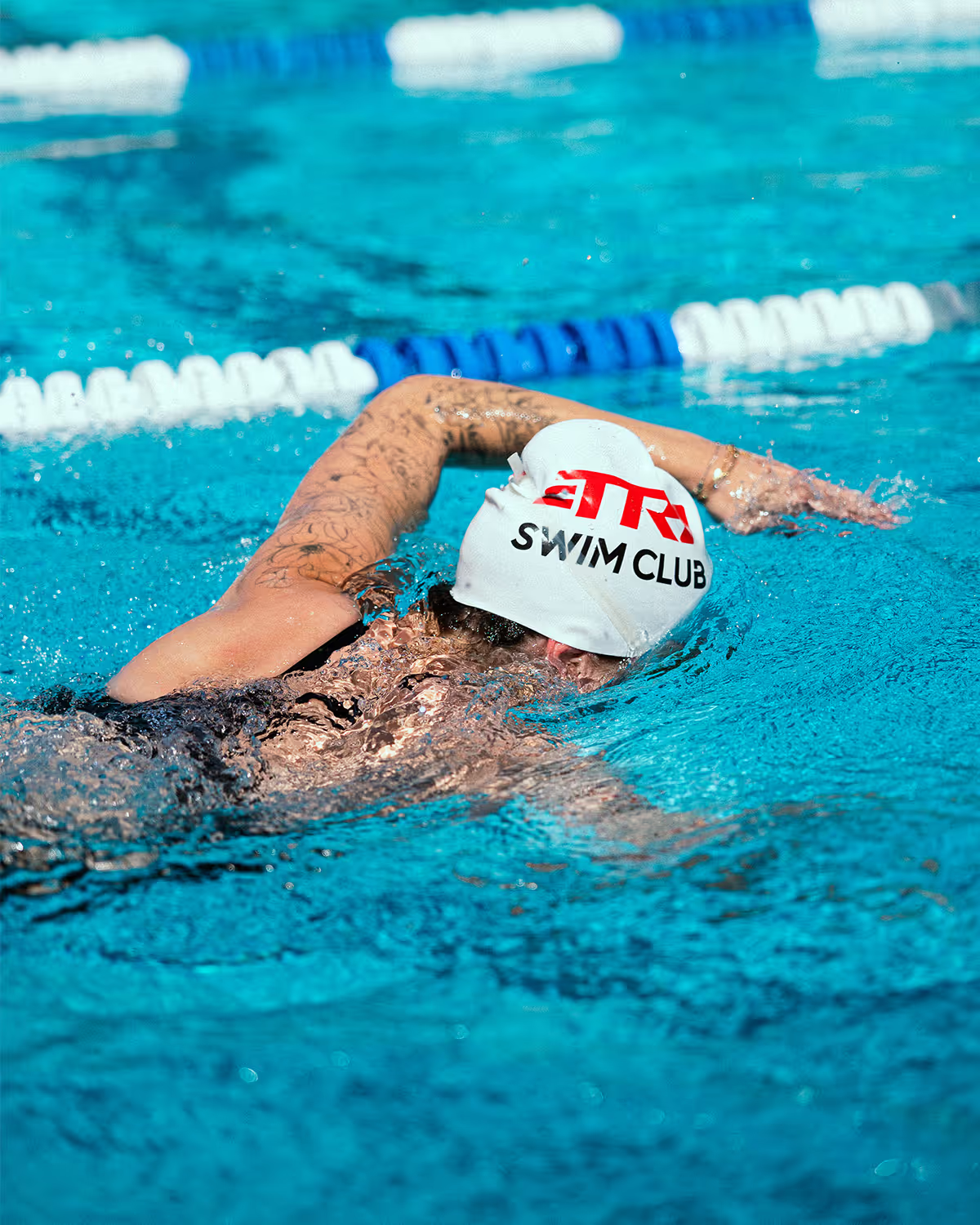
Chasing podiums or performance goals?
Train with elite-level structure scaled to your ability with 1:1 coaching to compete at your highest level.