How to Train for an Ironman Swim
3.8 kilometers is the scariest number on most Ironman athletes’ calendars. Coach Ziggy breaks down exactly how often, how far, and how long to train for your Ironman swim, and why piling on slow laps is the wrong answer.


You signed up for an Ironman. Somewhere between hitting "register" and reading the confirmation email, a number jumped out at you: 3.8 kilometers. In open water. Before you even get on the bike.
For a lot of triathletes, that number is the scariest part of the whole day. Not the 180-kilometer ride. Not the marathon. The swim. And the usual response is to start piling on laps and hope the fear goes away somewhere around week 12.
It doesn't have to work that way. Training for an Ironman swim is a lot simpler, and a lot less time-consuming, than most plans make it look. You just have to train for the right things, in the right order.
How Long Is The Ironman Swim?
The Ironman swim is 3.8 kilometers, or 2.4 miles. That's about 4,200 yards, or 152 lengths of a 25-meter pool.
Most races give you 2 hours and 20 minutes to finish the swim, but always check your race's athlete guide, because conditions and cutoffs can vary. For most triathletes with a decent amount of training behind them, the cutoff isn't the real worry. The real worry is getting out of the water feeling calm, in control, and ready for a very long day on the bike.
Because here's the thing that gets lost. The swim is the shortest part of your Ironman. For most age groupers, it's somewhere around an hour to an hour and a half out of a 10 to 15 hour day. A great swim won't win you the race, but a bad one, where you panic, go out too hard, or crawl out of the water exhausted, can absolutely lose it.
How Many Times A Week Should I Swim For An Ironman?
At least three times a week. Four is ideal.
For a 70.3, I tell people two swims a week is the minimum. An Ironman asks more of you, and three is where the floor moves. Swimming is a feel sport. Your timing, your breathing, and your sense of the water fade fast when you're away from it, and they come back slowly. Three swims a week keeps you close enough to the water that every session builds on the last one instead of spending the first 15 minutes getting your feel back.
A fourth swim is a bonus, and it's a great place to put an open water session when you can get one.
But more important than how many is how consistent. Three swims a week, every week, for five months beats five swims one week and one the next. It also beats the heroic Saturday swim that wipes you out for your long ride. More on that in why consistency beats the hero workout.
How Long Does It Take To Train For An Ironman Swim?
Give yourself 20 weeks.
That's enough time to build your technique, your speed, and your race-specific fitness, in that order, without rushing any of them. If you're already fit and a competent swimmer, you can get it done in 16. But 16 is the shortcut, not the plan. If you're newer to swimming or coming back after a long break, take the full 20.
And if your Ironman is more than 20 weeks away, don't wait. The months before your build are the best time to fix your stroke and build some speed, when nothing is on the line. I wrote about that in off-season swim training.
How Many Meters A Week Should I Swim For An Ironman?
My minimum is roughly 6,000-7,500 meters a week.
That's about double the race distance, the same rule I use for the 70.3, spread across three sessions. Swim four times a week and you'll be over it without trying.
Double sounds like a lot until you look at what it adds up to. Seven and a half thousand meters a week over a 20-week build is about 150,000 meters. That's almost 40 Ironman swims' worth of swimming, all banked before race morning. You're not going to be short on distance.
Like the 70.3, this is the floor, not the ceiling. If you're chasing a Kona slot, you'll probably swim more. But if your goal is a strong, confident swim and a fresh start to your bike, this is plenty, as long as you swim it with a purpose.
How Long Should Each Ironman Swim Session Be?
Plan on 60 to 75 minutes per session.
Your hard day can stay closer to an hour. Your medium day, which carries the most aerobic swimming and distance, is the one that stretches toward 75 minutes.
And this is where I push back on how most triathletes think about swim training. The number on your watch at the end of the session is not the measurement that matters most. What happens inside those 75 minutes matters a lot more. An hour of easy, unstructured laps at one speed will get you a big number and not much else. A session with a real warm-up, focused technique work, a main set at the right effort, and a proper cool-down might cover less distance, and it'll make you a lot faster. The first kind is junk yardage, and it's the most common way Ironman athletes waste their pool time. Here's the math on why in the time-crunched swim.
Do I Need To Swim 3.8 km Before Race Day?
No. And this is the one I get asked about the most.
You don't need to prove you can swim the full distance in training before you swim it in the race. A marathoner doesn't run 26.2 miles before race day. They build the speed and fitness that make marathon pace feel manageable, and they trust it.
Swimming works the same way. If most of your weekly training is at race pace and faster, then Ironman pace is going to feel like cruising when you get there. Your weekly volume is already double the race distance. And your longer aerobic swims remind your body what an hour in the water feels like. I wrote a whole post on this in your short swims already paid for your Ironman swim.
What Should Ironman Swim Training Include?
Here's where most Ironman plans go wrong. They focus almost entirely on distance and almost nothing on what the race actually feels like.
An Ironman swim start is chaos. Hundreds or even thousands of people, arms and feet everywhere, no black line on the bottom, and a heart rate that wants to go through the roof. The athletes who panic aren't usually the least fit. They're the least prepared for what the first few hundred meters feel like. So your training has to prepare you for that, not just for the distance.
Speed. I know it sounds backwards for the longest swim in triathlon, but speed is what makes Ironman pace feel easy. The faster your top end, the further below it your race pace sits, and the less each stroke costs you over 3.8 kilometers. Short, fast repeats with long rest belong in an Ironman plan, especially early in your build. Here's why in the true cost of skipping speed work.
Race pace. As your race gets closer, you stretch that speed into a pace you can hold for a long time. Longer repeats with short rest, at the effort you plan to race at, teach you what that pace feels like so you can find it on race morning without a watch.
Heart rate control. Everyone goes out hard. The skill is being able to push through the start, find a good spot, and then bring your effort and breathing back under control without stopping. You practice that with sets that go hard, then settle.
The clock. Swimming in the pool without looking at the clock is like riding without a power meter. Training with rest matched to the goal of each set, something like a minute on sprints and ten seconds on aerobic work, teaches you to know your pace by feel, which is exactly the skill that stops you from sprinting the first 400 and paying for it for the next hour. Here's how in get faster with interval training.
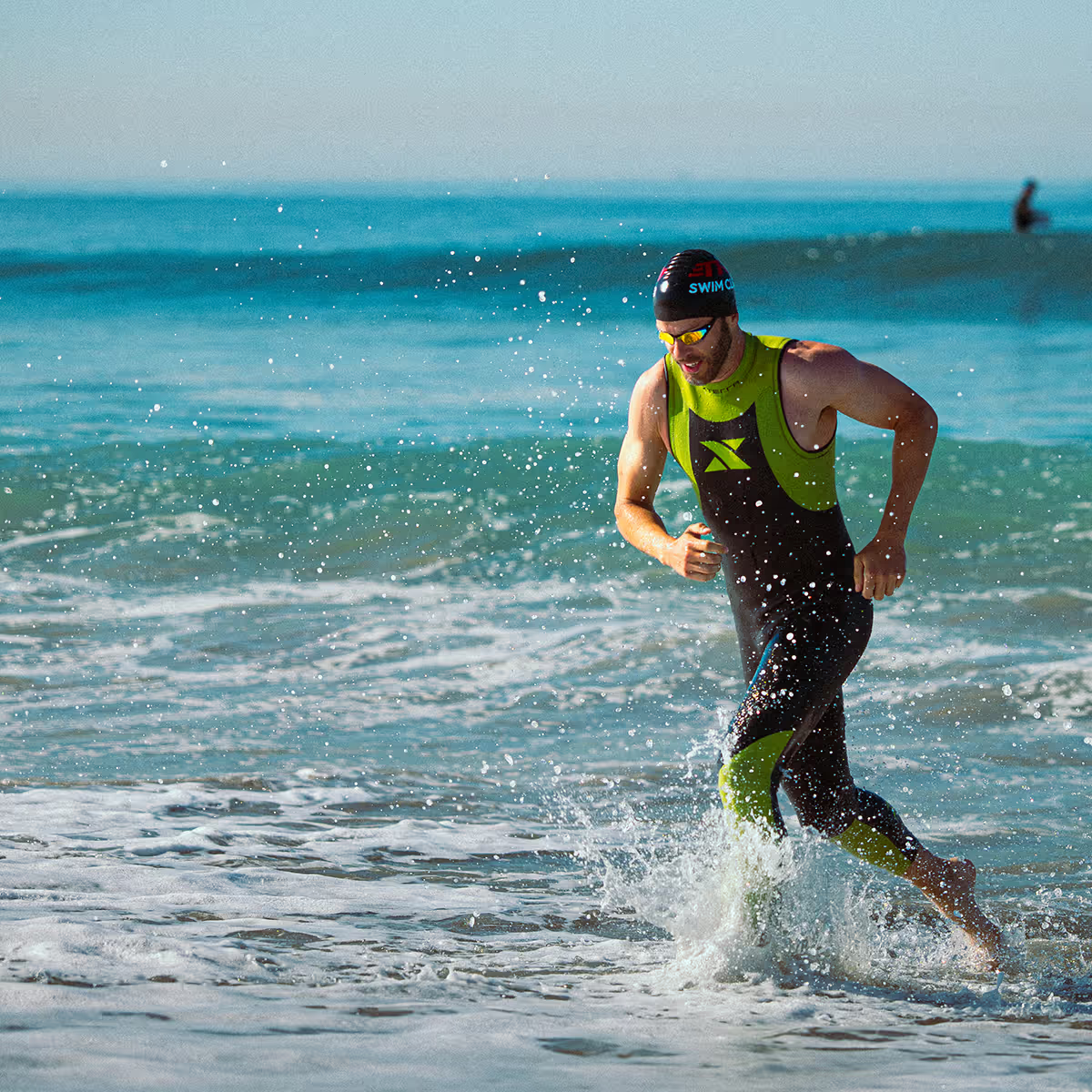
Open water. The pool has walls, a black line, and clear water. Open water has none of that. Sighting, swimming straight, dealing with chop, and staying calm when you can't see the bottom are all skills, and you only get better at them by practicing them.
How Often Should I Swim In Open Water Before An Ironman?
At least once a month during your build, and more in the last six to eight weeks.
Make those swims count. Practice sighting every few strokes. Practice swimming right next to someone. Practice a fast start and then settling into your pace. And if your race is wetsuit legal, wear yours on at least a few of those swims so race day isn't the first time you've swum in it for an hour or more.
But don't let the wetsuit do your training for you. A wetsuit floats your legs and hides a lot of problems in your stroke, and some Ironman races, Kona included, aren't wetsuit legal at all. If you only ever swim well in a wetsuit, you'll find that out at the worst possible time. I wrote about that in beware of the wetsuit.
What Does An Ironman Swim Training Week Look Like?
Here's how I'd structure three sessions adding up to about 7,500 meters. I split weeks into hard, medium, and easy days. Those labels are about how much the session taxes your nervous system, not how far you swim.
Day 1: Hard (about 2,500 meters). Speed work. Short, fast repeats with plenty of rest, plus some hard-then-settle efforts to practice controlling your heart rate after a fast start.
Day 2: Medium (about 3,000 meters). Your longest swim of the week, mostly at a steady aerobic effort and race pace, with short rest. It's the most distance, but it's easier to recover from than the hard day.
Day 3: Easy (about 2,000 meters). Technique, drills, and kick, with some aerobic swimming mixed in.
Day 4 Medium (optional): Open water, when you can get it. Sighting, starts, and longer stretches of continuous swimming with no walls to push off.
That's the whole week. Three to four hours of swimming, and every session has a job to do.
How Should Ironman Swim Training Change Over 20 Weeks?
The order matters as much as the work itself.
Early in your build, the focus is speed and technique. Short, fast swimming with plenty of rest, while your bike and run volume is still manageable. This is when you raise your top end speed.
In the middle of your build, you stretch that speed into race pace. The repeats get longer, the rest gets shorter, and you start practicing what race morning is going to feel like.
In the final weeks, you sharpen up, peak, and taper. You keep some intensity so you stay sharp, and you cut back on volume so you show up rested. Don't skip the taper, and don't sneak in one more big week "just to be safe." That's not preparation. It's volume being used as a mask for uncertainty. I wrote about that in training volume: a tax on triathletes who don't trust their plan.
You can't hold a race pace you never built the speed for. Every phase sets up the next.
The Short Version
Race distance: 3.8 km (2.4 miles)
Sessions per week: 3 minimum, 4 ideal
Time to prepare: 20 weeks, or 16 if you're already fit and a competent swimmer
Session length: 60 to 75 minutes
Weekly volume: roughly 7,500 meters minimum
Open water: at least once a month, more in the last six to eight weeks
What matters most: what's inside the session, not the distance on your watch
Most Ironman athletes spend their whole build worrying about the distance. They swim slow laps until the number looks big enough, and then they stand on the beach on race morning still wondering if it was enough.
The athletes who have a great Ironman swim train the other way. They build speed first, learn their pace, practice the chaos, and trust the work. They don't walk into the water hoping they can make it 3.8 kilometers.
They walk in knowing it's the easiest part of their day.
Ready to see real progress in the water?
Follow structured weekly sessions that steadily build speed, endurance, and race control.
New to structured swim training?
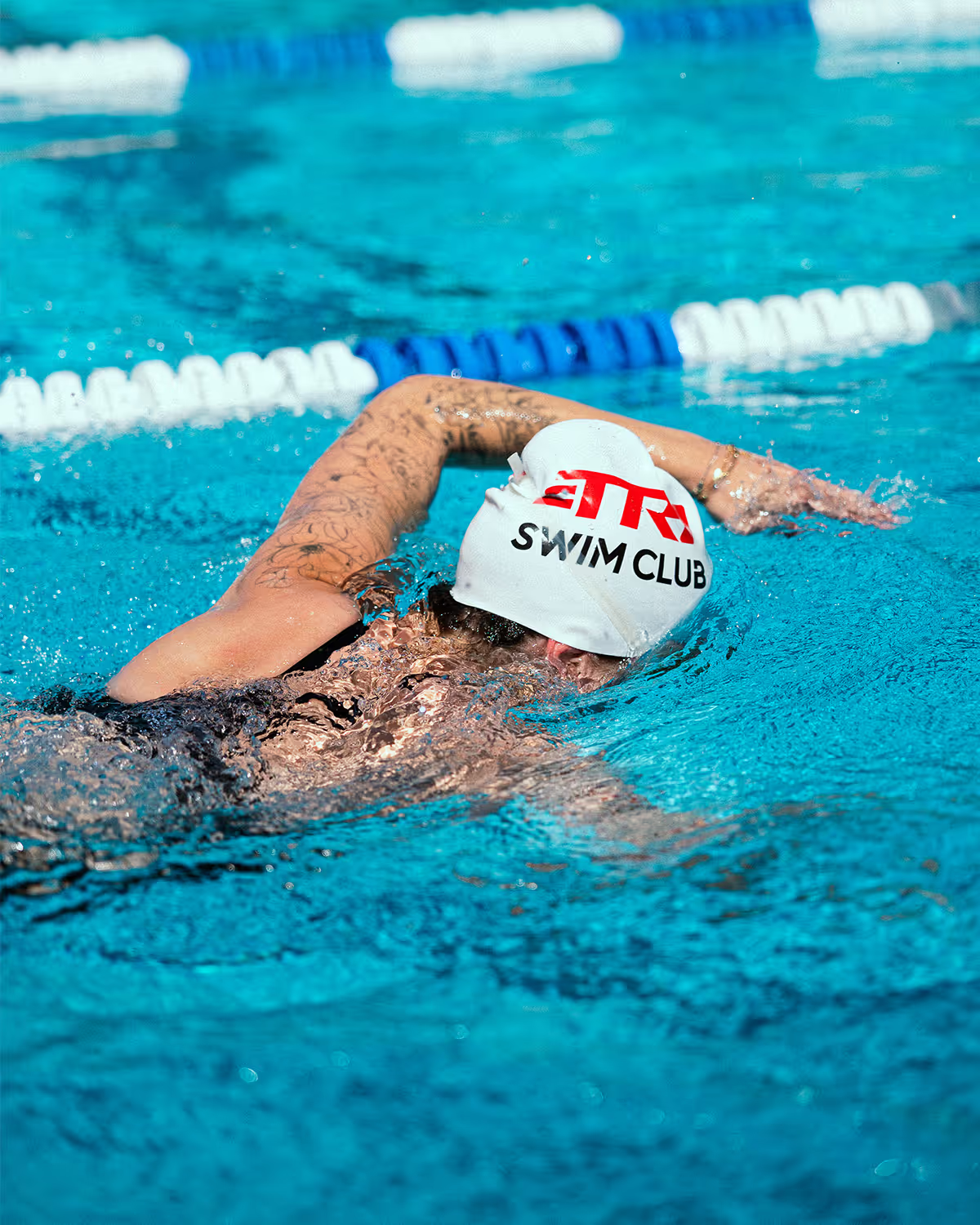
Build confidence, improve technique, and double your distance before you join the TRI Swim Club.
Chasing podiums or performance goals?
Train with elite-level structure scaled to your ability with 1:1 coaching to compete at your highest level.