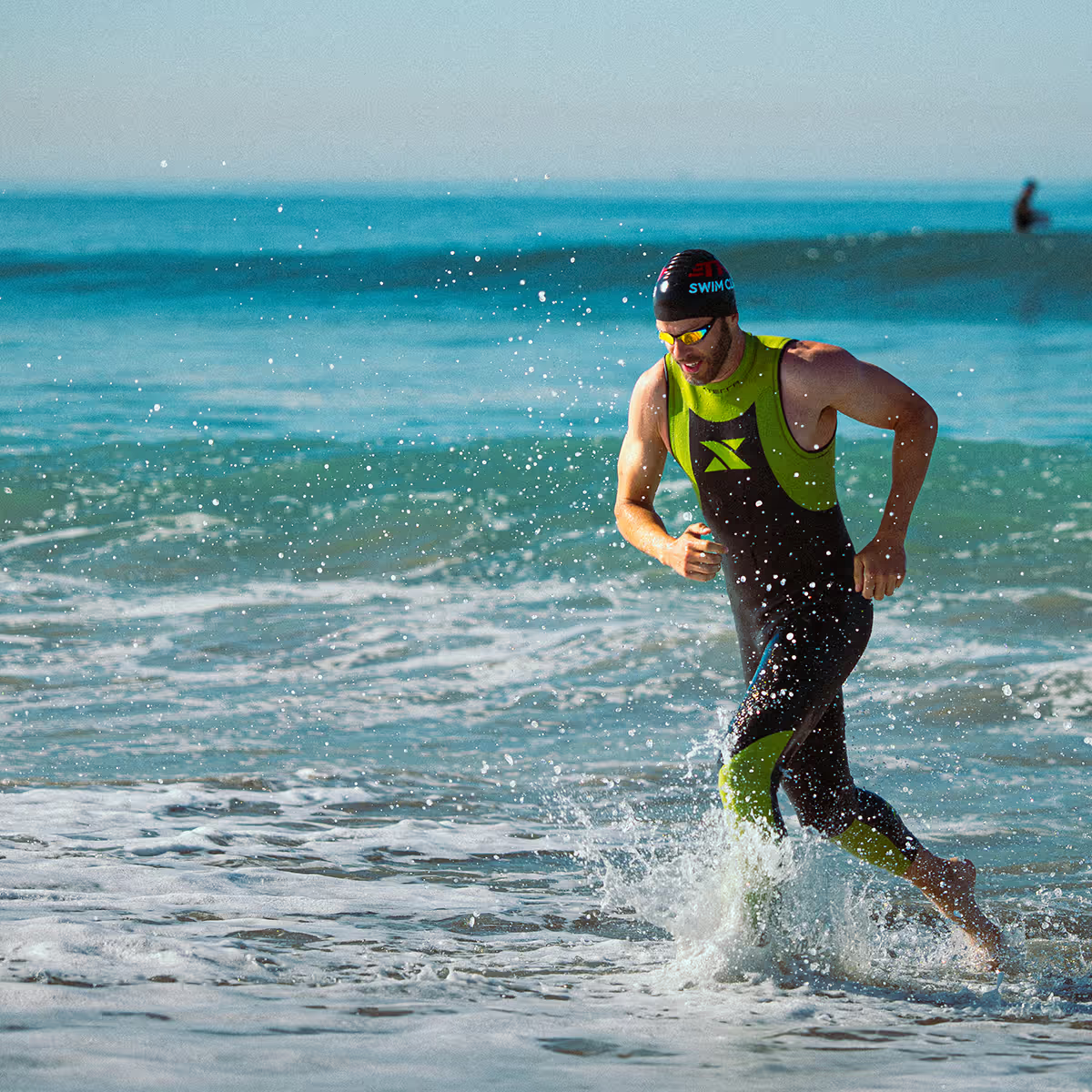
Off-Season Swim Training: Where Fast Triathletes Are Actually Made
Races are won in the summer, but swimmers are built in the off-season. Here’s how to use the winter to come back faster, while everyone else takes it off.

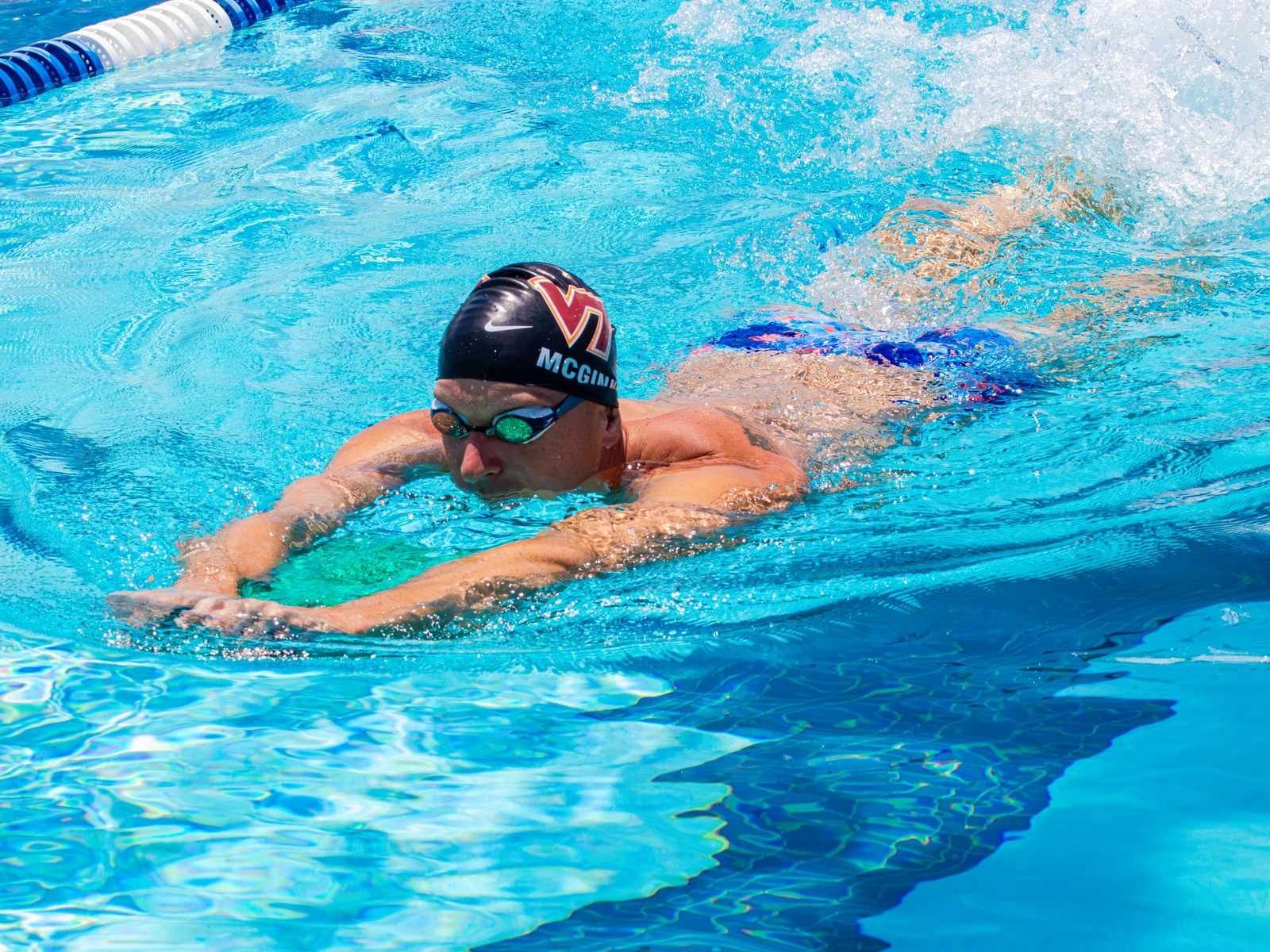
Your last race is done. The medal is hanging on a doorknob somewhere, the bike is getting a well-earned break, and you're probably looking at the calendar wondering what you're supposed to do with yourself until spring.
For a lot of triathletes, the answer for the swim is simple: nothing. The pool membership goes quiet, the goggles stay in the bag, and the plan is to get back in the water sometime around February, when the next race starts to feel real.
That's a shame. Because if there's one season where triathletes can make the biggest jump in their swimming, it's this one. Races are won in the summer. But swimmers are built in the off-season.
How Much Time Should I Take Off After My Last Race?
Start with a real break. Two to four weeks of rest after your last race of the season is a smart move, both for your body and your head. Swim if you feel like it, ride if you feel like it, but don't chase numbers and don’t do anything hard. Your body has been absorbing training stress for months, and this is when it gets to recover from all of it.
Resting isn't lazy. It's part of training. I wrote a whole post about it in get faster with leisure time. The athletes who skip the break are usually the ones who are fried by midseason. If you're getting away with it now, it's usually because you're new to the sport or young enough that you don't need much recovery yet. It'll catch up with you eventually, and you won't lose anything by taking a short break. Trust me.
But once the break is over, it's time to get back in the water. And the off-season gives you something you don't have the rest of the year.
Why The Off-Season Is The Best Time To Fix Your Swim
During the season, your swim is fighting for time and energy with your bike and run. Long rides and long runs eat up your weekends, your legs are always a little tired, and the swim usually gets whatever's left over.
The off-season flips that. Your bike and run volume is lower, your race schedule is empty, and you're not trying to peak for anything. That means you finally have the time and energy to give your swim real attention.
And for most triathletes, the swim is where that attention pays off the most. It's usually your weakest leg, which means it's where the biggest and cheapest gains are sitting. I've written about that in stop dodging the one leg that pays the most. The off-season is the best time to stop dodging it.
What Should I Focus On In Off-Season Swim Training?
1. Technique and fundamentals
This is the big one. The off-season is the best time of year to fix your stroke, because you're not trying to hold race pace every week. You can slow down, drill, film yourself, and rebuild things the right way without worrying about your next race.
Work through the fundamentals in order: breathing, kick, body position, and then your catch. I lay out each one, with the drills to fix it, in my guide to swimming technique for triathletes. And film yourself early in the off-season. Most triathletes have never seen their own stroke, and a few seconds of video will tell you exactly where to start.
Technique changes take time to stick. If you change your stroke in May, you'll be racing with a half-built version of it in June. If you change it in November, it'll be second nature by race season.
2. Speed before volume
Here's where my approach is different from what most triathlon plans tell you.
The traditional off-season plan is all base: long, slow, easy swimming to build an aerobic engine. But you're a triathlete. You already build a huge aerobic engine on the bike and the run and you just finished your A race, which means you're coming off some of the best fitness of your year. What most triathletes are missing isn't more base. It's speed.
I build front-end speed early in the season, before the heavy aerobic volume comes in. Short, fast repeats with plenty of rest, swum at a genuinely hard effort. There's a reason for the order. Lots of aerobic volume makes it harder for your body to build top-end speed, so building speed first, when your overall training load is lower, gives you a higher ceiling to work with all season. Later, as your races get closer, you stretch that speed out into race pace.
Raise the ceiling now, and everything under it comes up with it. I go deeper on why in the true cost of skipping speed work.
3. Kick and strength
The off-season is also a great time to work on the things that hold your stroke together.
Kick every session. Your kick is what holds your legs up and keeps your body in line, and it's one of the easiest things to improve when you finally have the time to work on it. Even Joe Skipper, an Ironman champion I coach, spent a six-week block working on his kick. More on that in the elephant in the pool.
And if your technique is already solid, the off-season is a great time to add resistance work. T-shirts, drag socks, and small parachutes build power in your actual stroke. Just make sure your foundations are second nature first. Here's how to do it right in get faster with resistance training.
4. Consistency
None of this works if you only swim when you feel like it.
Three swims a week, every week, all winter, will do more for your swim than anything else on this list. Swimming is a feel sport. Your timing, your breathing, and your sense of the water fade fast when you're away from it, and they come back slowly. The athletes who swim consistently through the off-season start their season months ahead of the ones who take the winter off. Here's why in why consistency beats the hero workout.
What Shouldn't I Do In The Off-Season?
Don't chase volume. Long, slow, unstructured laps feel productive in December. They mostly teach you to swim slowly. Every session should have a purpose, even in the off-season.
Don't race every set. The off-season isn't the time to swim every workout at race pace. Hard days should be hard, steady days should be steady, and technique work should be about getting it right, not getting it done fast.
Don't wait until spring. The triathletes who start swimming seriously in February are spending the first two months of their season just getting back to where they were last year. Start now, and you'll spend those months getting better instead.
How Does The Off-Season Fit Into The Whole Season?
Think of your swim season in phases, each one building on the last.
The off-season is where you lay the foundation: technique, fundamentals, kick, and front-end speed. As the season gets closer, you shift toward longer race pace work, stretching the speed you built into a pace you can hold for your race distance. Then, in the final weeks before your key race, you sharpen up and peak.
Every phase depends on the one before it. You can't hold a race pace you never built the speed for, and you can't build speed efficiently on a stroke that's fighting the water. The off-season is where all of that starts.
What Does An Off-Season Swim Week Look Like?
Three sessions, each with a job:
Day 1: Medium. Steady aerobic swimming with plenty of kick, plus some technique work woven in.
Day 2: Hard. Speed work. Short, fast repeats with long rest, so every rep is genuinely fast.
Day 3: Medium. Technique, drills, and a few sprints. This is your stroke-building day: breathing, body position, catch, and filming yourself when you can. Finish it off with some pickups where you put it into practice.
That's it. About three hours a week, and every hour building toward a better season.
Here's the thing most triathletes figure out too late. The swim you have next summer isn't decided next summer. It's decided right now, in the months when nobody's watching and nothing's on the line.
Your competitors are taking the winter off. Let them.
Ready to see real progress in the water?
Follow structured weekly sessions that steadily build speed, endurance, and race control.
New to structured swim training?
Build confidence, improve technique, and double your distance before you join the TRI Swim Club.
Chasing podiums or performance goals?
Train with elite-level structure scaled to your ability with 1:1 coaching to compete at your highest level.