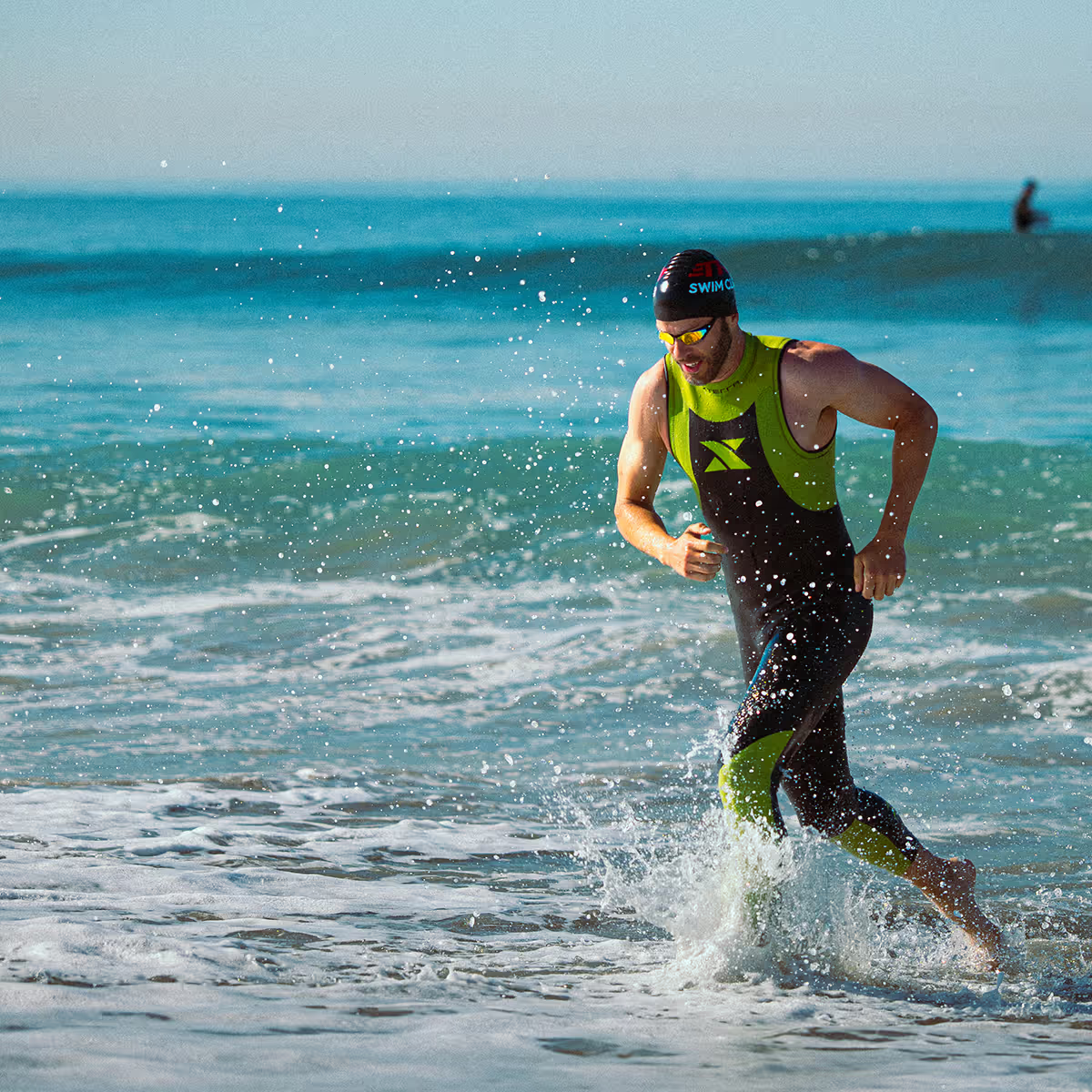
Your Short Swims Already Paid for Your Ironman Swim
Worried you can't finish an Ironman swim without swimming 3,800 meters straight in practice? Marathoners don't run 26.2 before race day, and you don't need the full swim either. Here's the math on why your weekly training already covers the distance many times over, and why speed work makes Ironman pace feel easy.

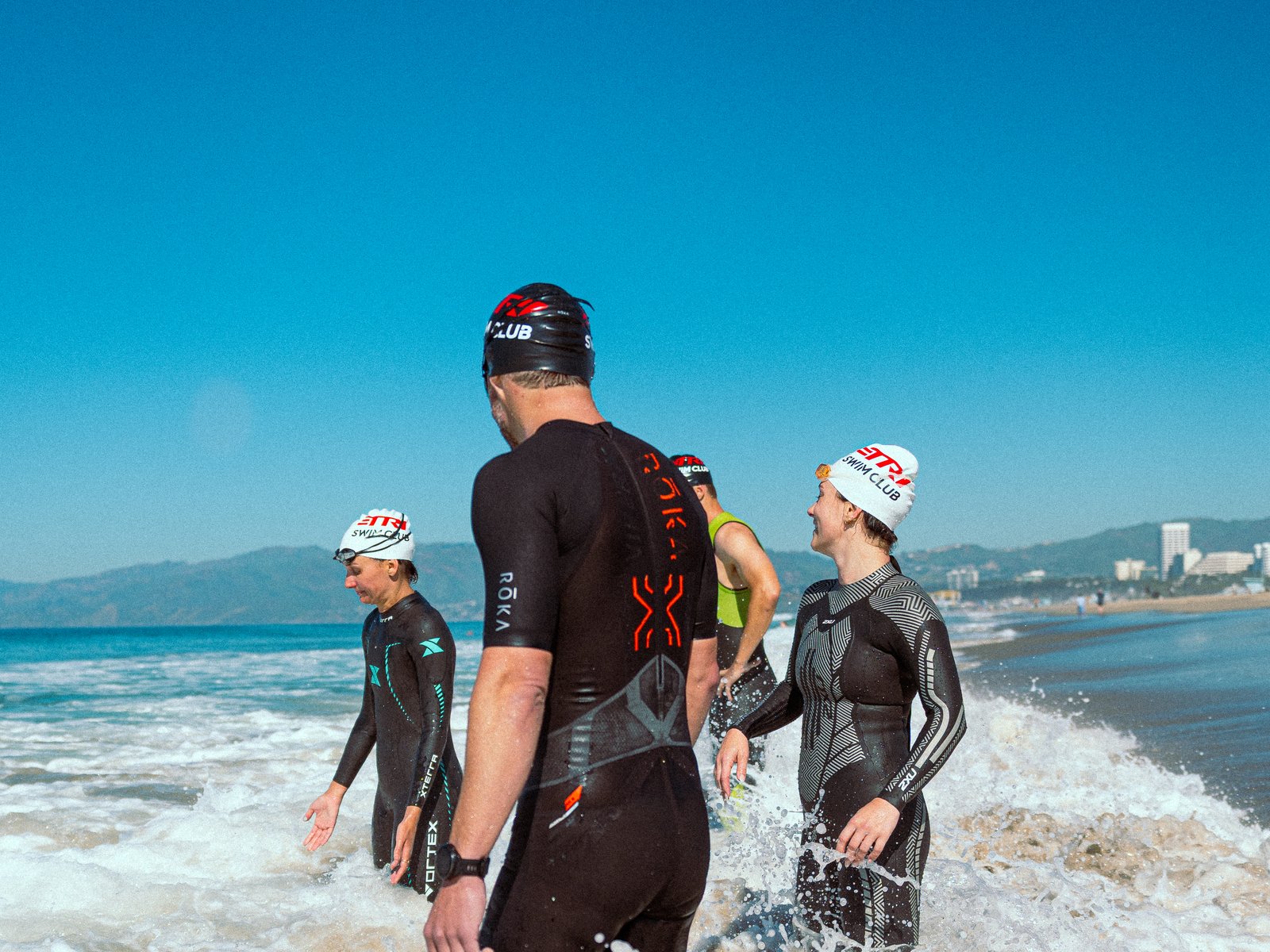
Now that readers are starting to get excited about cutting their junk yardage, doing real speed work, and even picking up a kickboard, I'm getting a lot of questions about one big fear. It usually sounds something like this: "This all sounds great, Ziggy, but I'm training for a full Ironman.* How am I going to finish a 3,800-meter swim if I'm never doing long straight swims, or the full distance in practice?"
I have to admit, I don't worry much about this for my athletes. And I don't think you need to either. Why? Because once you look at the real numbers, the fear shrinks to almost nothing. And like everything else in your training, it's in your control.
How much swimming does it take to be ready for an Ironman? Some people get a big spiral of fear in their eyes and cry out, "You have to swim the whole 3,800 straight, every week, to know you can do it!" Sure, in the worst case, if you've never swum more than a few hundred meters at a time, have no idea how your body handles an hour in the water, and you're terrified of the unknown, I can see why a full-distance practice swim feels like a safety blanket.
The Big Picture
But let's look at how every other endurance sport handles this.
Nobody training for a marathon goes out and runs 26.2 miles in practice. Most marathon plans top out with a long run somewhere around 18 to 20 miles. Runners do those long runs to make sure their legs and body can handle the time on their feet, but they don't run the full race distance before race day, because the cost in recovery and injury risk is way too high for what it teaches them. They trust that their total training, week after week, has built what they need.
Swimming is no different. We still do longer aerobic swims. You'll see them in your plan, because your body does need some time spent swimming steadily. But you don't need to swim the full distance in training to know you can finish it. That's a test, not training, and I've already written about how testing yourself every week gets mistaken for preparation.
Real Numbers
Now here's where the numbers come in.
Say you're swimming around 7,000 meters a week, which is a very normal amount for a time-crunched Ironman athlete in a structured plan. That's almost twice the race distance, every single week. Over a 16-week build, it adds up to about 112,000 meters. That's roughly 29 Ironman swims' worth of swimming, all banked before race morning.**
And here's the part that really matters. Most of that swimming isn't easy. It's at threshold, race pace, and faster. So when race day comes and you settle into your Ironman pace, you're swimming at an effort that's a long way below what you do every week in practice. Think of a runner who does intervals at 7:00 per mile. A 9:00-per-mile marathon pace feels comfortable to him, because it's so far from his max. That's exactly what happens in the water. When your training is built on speed, Ironman pace feels like cruising.
Swimming Is Different
There's one more thing working in your favor. The swim is the shortest leg of the whole day. For most age-groupers it's somewhere around an hour, out of a 10 to 15 hour race. Your body has to be prepared to sit in an aero position on the bike for five, six, seven hours, and then run a marathon on tired legs. That's where long-duration durability training really earns its keep. The swim simply doesn't demand the same thing. You need to be able to swim continuously for an hour at a steady effort, and your weekly volume, your aerobic swims, and the engine you're building on the bike and run all take care of that.***
So you can let the full-distance practice swim go. Your total weekly volume will already be well beyond the race distance. Your speed work will make Ironman pace feel easy. And your longer aerobic swims will remind your body what an hour in the water feels like.
We'll Celebrate With A Burger
And on race day, you'll come out of the water fresher than the people who spent their whole season grinding out 3,800 straight every Saturday.
At this point, you'll invite Coach Ziggy out for a celebratory post-race burger to thank him.
* I'm always torn about whether to call it "Ironman" or "full-distance triathlon." I'll mostly say Ironman, since that's what people actually type into search engines.
** These numbers are just an example. Your weekly volume might be higher or lower depending on your level and your plan, but for almost every Ironman athlete on a real program, the weekly total lands well above the race distance.
*** None of this means you never swim long. Your plan will include longer aerobic swims, and some athletes do benefit from an open-water swim close to race distance late in their build, just to rehearse sighting, nutrition, and wetsuit comfort. That's a rehearsal for race day, not a requirement for fitness, and it doesn't need to happen every week.
Ready to see real progress in the water?
Follow structured weekly sessions that steadily build speed, endurance, and race control.
New to structured swim training?
Build confidence, improve technique, and double your distance before you join the TRI Swim Club.
Chasing podiums or performance goals?
Train with elite-level structure scaled to your ability with 1:1 coaching to compete at your highest level.