The Race-Day Warm-Up Nobody Bothers to Do
Half the field stands on the beach doing nothing, then sprints into cold water and panics 200 meters in. They're not out of shape, they just skipped the warm-up. Here's the triathlon swim warm-up that actually works: land first, then water, four jobs, done, plus what to do when you can't get in the water at all.


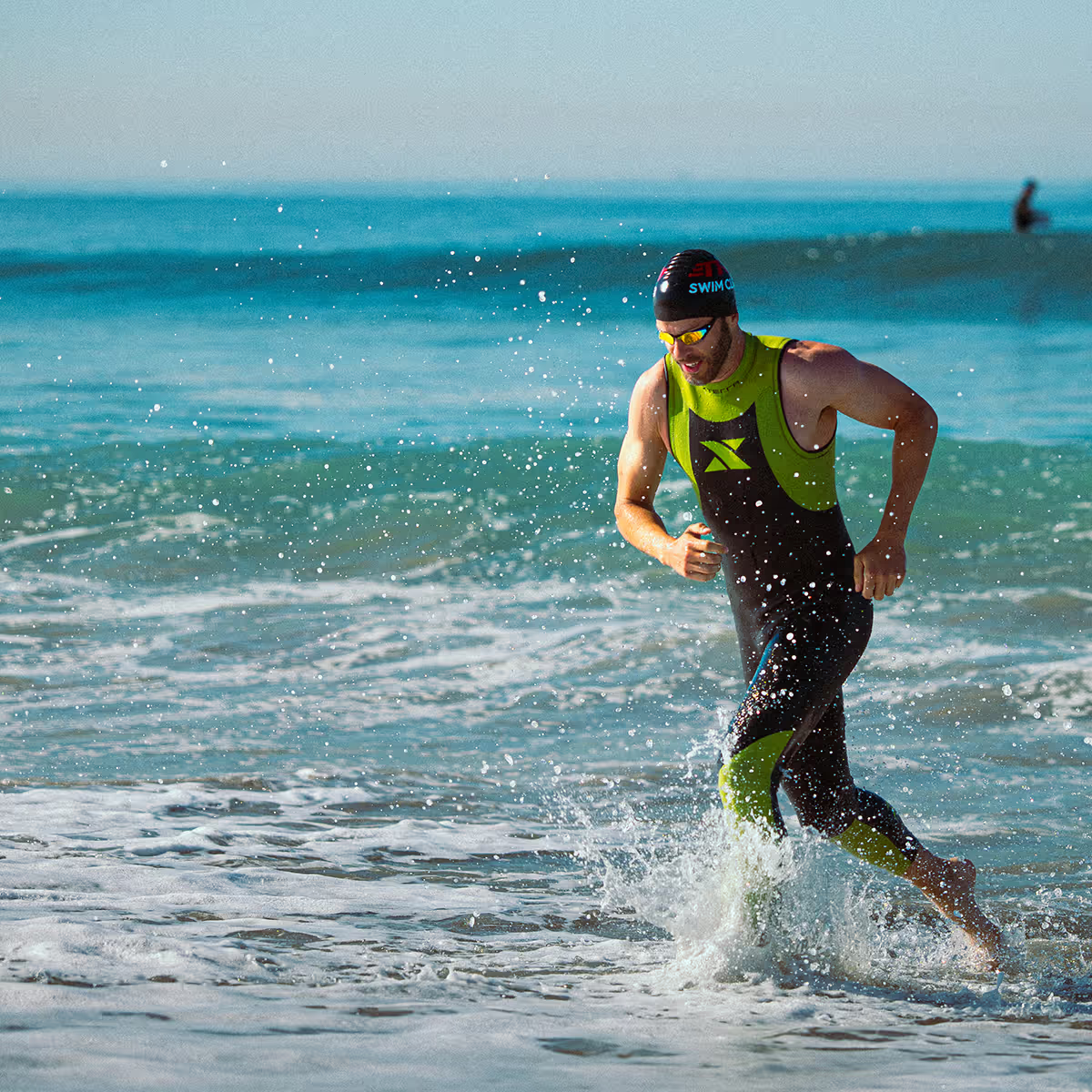
Here's a scene you've watched a hundred times, and maybe lived. The pros are off, the age-group waves are stacking up, and half the field is standing around on the beach in their wetsuits, cold, stiff, and doing absolutely nothing.
Then the gun goes off, they sprint into cold water on a cold body, their heart rate rockets from resting to redline in about eight seconds, and 200 meters in they're gasping, panicking, and convinced they're out of shape.
They're not out of shape. They just didn’t prime their body properly for what’s ahead and they aren’t racing the way they’ve been training.
The Cost of Skipping Warm-Up
No warm-up can literally cost you your entire race and make all the months of training void. It costs you thirty minutes and a little planning, and it buys you a start that feels controlled instead of terrifying. It’s the difference between having controlled speed to make a pack and grooving into your rhythm versus being gassed, filled with lactic acid, and burning shoulders and triceps that make you want to roll over and float on your back.
Skip it, and you spend the first 400 meters, the exact stretch that decides whether you make the pack or swim alone all day, just trying to survive. You already know what that first 400 is worth. Don't hand it away because you couldn't be bothered to warm up.
So here's how to actually do it.
The first thing to understand is that triathlon warm-ups are messy and they vary wildly. Some races let you swim beforehand. Plenty don't. The water's closed, the start's a zoo, the officials herd you straight into the corral. So the smart approach is to warm up on land first, then finish in the water if and when you can get in. That way you're never depending on water access you might not get.
Start On Land
Before you go anywhere near the water, get your body moving. Light heart-rate work, some easy jogging, plus dynamic stretches to loosen your shoulders and hips. This is doing the heavy lifting of the warm-up in a place nobody can take away from you. Get warm, get loose, get the blood moving. If it turns out you can't swim beforehand at all, this land work becomes your entire warm-up, and that's fine, a land warm-up beats no warm-up every single time. (I've got a full no-water routine coming in its own post, because it deserves one.)
Finish In The Water
If you can get in, a good swim warm-up only needs to be about 400-800 meters (depending on your level), and it should hit four things:
1. Wake up the body. General swimming, kicking, and sculling. Easy stuff, just feeling the water and raising the temperature. If you already did a solid land warm-up, you can shorten this or even skip it, you're not starting from cold anymore.
2. Get the heart rate up. This is the one that saves your start. A set like 4x50, or 4x:40, building or descending. Nothing fancy. You just need to get your heart up to around 140 bpm and remind your body what working feels like, so the gun isn't the first time it happens. A heart that's already been up there once doesn't panic when it goes there again.
3. Touch race pace. Get up to your race pace two or three times so it isn't a surprise when you have to produce it. Something like 3x75, or 3x1:00 at pace, with a 25 easy and about 90 seconds rest between each. Take the rest and relax. You're not here to get tired, you're here to show your body the pace.
4. Loosen back down. Finish with some easy swimming to shake out before you race. You want to walk to the line warm and loose, not gassed from your own warm-up.
That's it. Around 600 yards, four jobs, done.
Tips & Tricks For Race Morning:
Time it right. Give yourself about 30 to 40 minutes after your warm-up to dry off, get your suit on, and get organized. But never go longer than about 45 minutes between warming up and racing, or you lose most of the effect and you're basically cold again. The warm-up has a shelf life.
No swim allowed? Simulate your strokes on land with resistance cords. No cords? Push-ups or bench dips to fire up the triceps, and arm swings to loosen the shoulders. You can prime the right muscles without a drop of water.
Caffeine, if you use it, goes in about 45 to 60 minutes before the gun, so it's actually working when you hit the water instead of kicking in on the bike.
Stay warm. Wear layers right up to the start. You want to be a sweaty boxer at the line, hot and loose and ready, not a shivering popsicle.
Top off right before you go. There's always a wait between finishing your warm-up and actually starting, and your heart rate drifts back down in that gap. Get it back up right before the line. My go-to is 10 fast jumping jacks and 5 fast, deep breaths, repeated until I feel switched on. If you already feel calm and loose, do nothing.
A warm-up won't win you the race. But skipping it can absolutely lose you the first 400, cost you the pack, and cook your legs for the bike, all before you've really started. Show up warm. Let everyone else panic in the cold.
Ready to see real progress in the water?
Follow structured weekly sessions that steadily build speed, endurance, and race control.
New to structured swim training?
Build confidence, improve technique, and double your distance before you join the TRI Swim Club.
Chasing podiums or performance goals?
Train with elite-level structure scaled to your ability with 1:1 coaching to compete at your highest level.