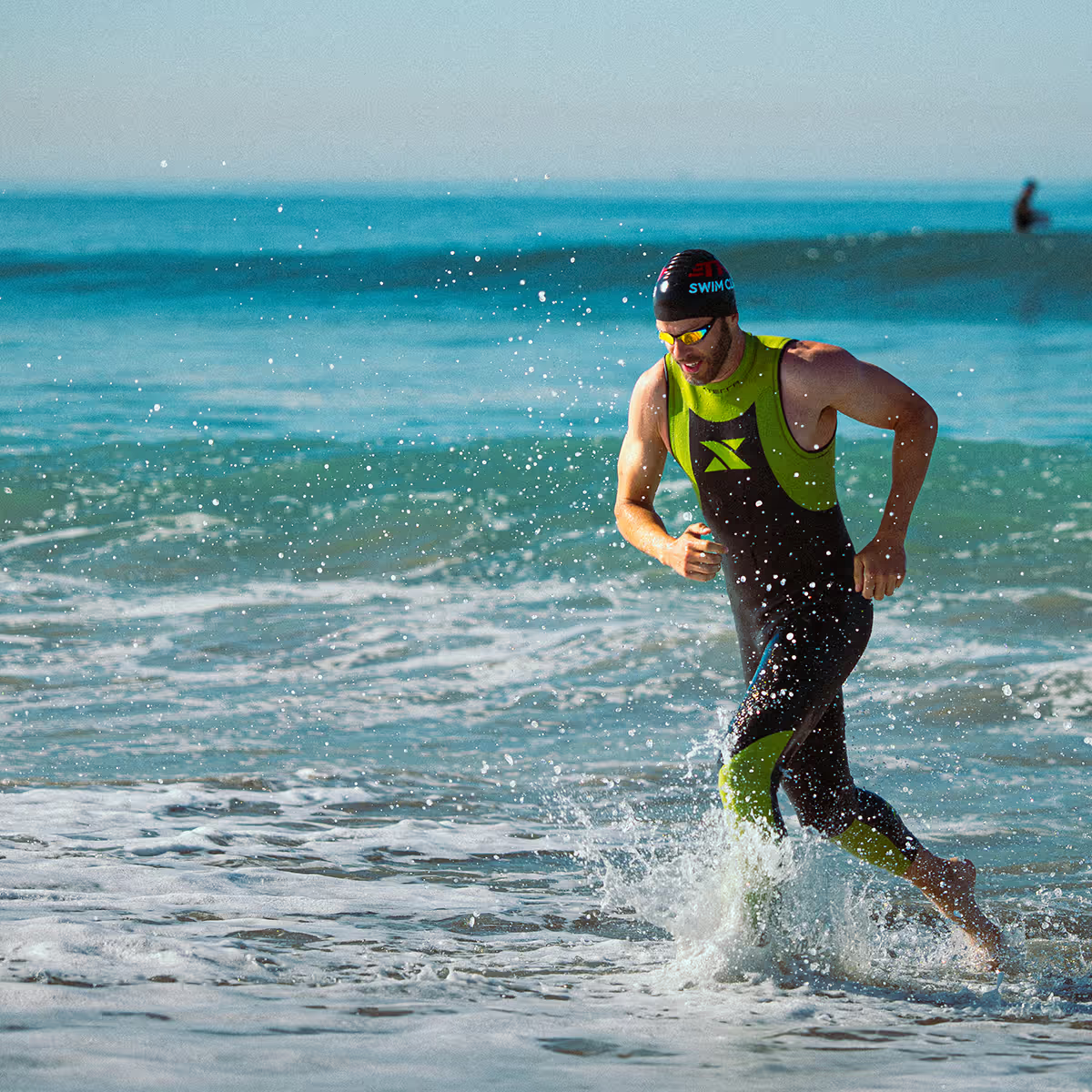
What Is the Real Cost of Not Having a Training Plan?
Most triathletes spend real money on their swim gear and nothing on their swim plan. The cost doesn’t show up on a receipt. It shows up as a season of hard work that goes nowhere.

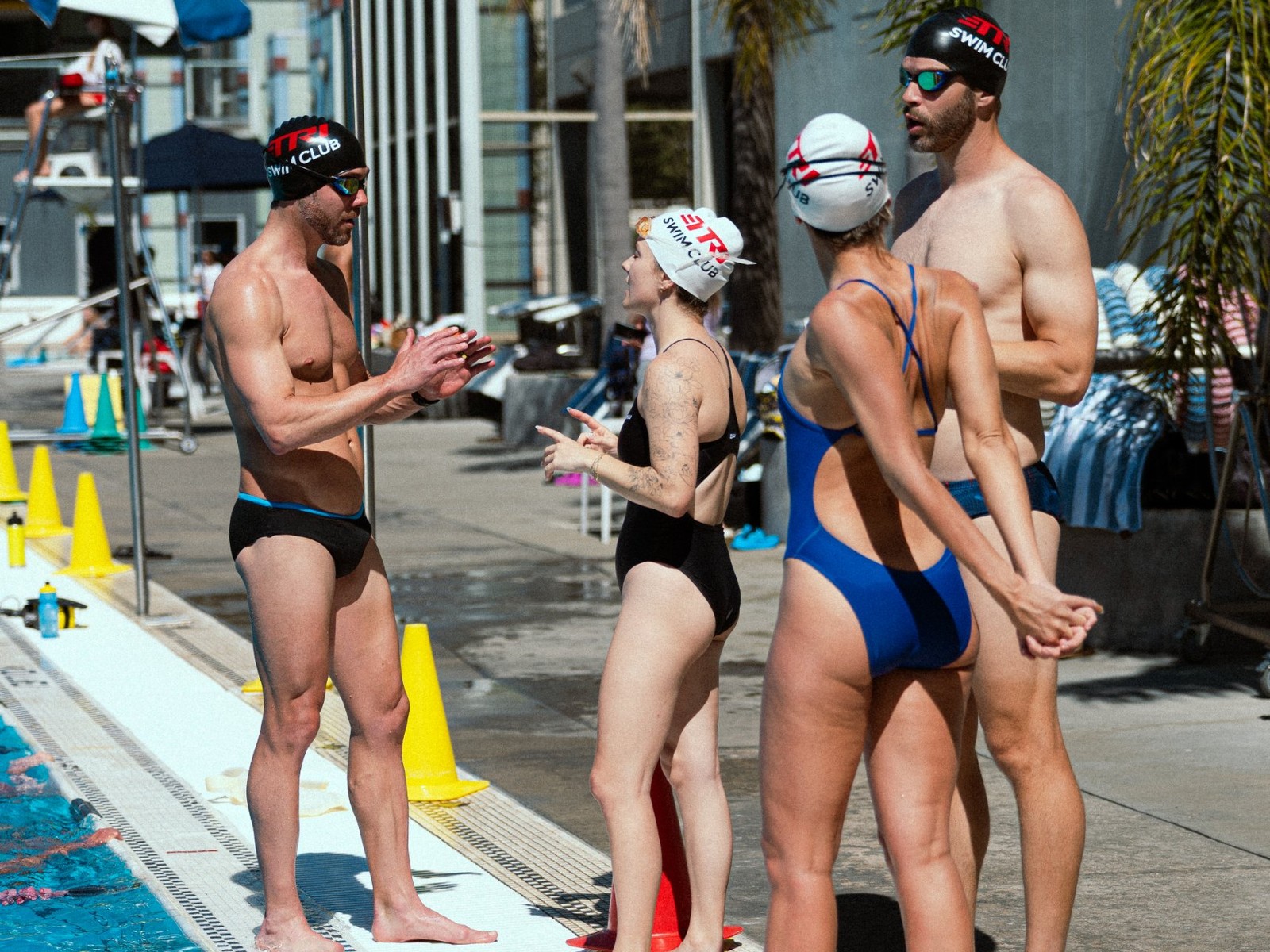
Most triathletes I meet are spending real money on their swim. Pool memberships, wetsuits, goggles, a watch that counts their laps and tells them they swam "efficiently." What a lot of them aren't spending anything on is the plan. The swim itself, the thing they actually do three times a week, gets made up on the spot.
And that's fine, right? Swimming is swimming. Get in, do some laps, get out. How much could it really cost?
The interesting thing about the answer is that it doesn't show up on a receipt. It shows up in two places. Hours in the water that felt like training and didn't move you forward. And minutes on race day that you never got back. For most triathletes, both add up to a lot more than they think.
Where Most Swim Workouts Come From
If you don't have a coach writing your sessions, your workouts probably come from one of three places.
You make it up. You get in, swim a warm-up, do whatever set sounds good that day, and get out. Usually it's some version of the same set you did last week.
You find it online. A workout from Instagram, a forum, a magazine, or a YouTube video. It looks legit. It might even be from a great coach. But it's a random snapshot at a different point in their season, with a different background and a different goal.
You have AI write it. This is the newest one, and I get the appeal. Type in your goal, get a nicely formatted 12-week plan in ten seconds. The sets look right. The yardage adds up. But it doesn't really know swim training. AI is only as good as its prompts and it lacks real world experience. I can instantly tell an AI workout from a real one in the same way I can tell a triathlon coach’s swim workout from a high level college or pro swim coach’s workout.
All three have the same problem. They give you workouts. They don't give you a plan that leads to results.
A Workout Is Not A Plan
A workout is one session. A plan is the reason that session is on that day, in that order, at that effort, in that part of your season. It's the difference between a pile of bricks and a house.
Let's close our eyes for a minute and think about what actually makes a swimmer faster over a season. When I do that, I keep coming back to a handful of things that only show up when someone experienced is putting the whole picture together.
Knowing how hard a hard set really is. Anyone can write 10 x 100 on 1:30. Knowing whether that's a set you'll make with something left, or one that'll break you by number six, takes experience. So does knowing when an athlete needs more rest to hit the speed the set is designed for, and when they need to be pushed through the discomfort because that's the whole point. Get it wrong one way and the set is junk. Get it wrong the other way and it's just suffering.
Knowing which cues and drills to use, and when. There are hundreds of drills out there. Most of them are fine. The skill is knowing which one fixes your problem, which cue makes it click for you, and when to stop drilling and start swimming. A drill done in the wrong phase, or for a problem you don't have, is just slow swimming with extra steps.
Structuring the season. Training phases, periodization, and progressive overload aren't buzzwords. They're the difference between peaking on race day and peaking in March. Building speed before stretching it into race pace. Adding load in a way your body can absorb. Knowing when to change phases, and when an athlete isn't ready to yet. That's a real skill, and it's built on years of seeing what works and what doesn't.
Knowing what each day is really costing you. This one surprises people. I split my athletes' weeks into hard, medium, and easy days. But those labels aren't about how many meters you swim. They're about how much the session taxes your nervous system.
A hard day is high-intensity work: speed, race pace, efforts that leave you fried even if the total yardage is modest. An easy day is genuinely easy: technique, recovery, feel for the water. And the medium day is often the one with the most total volume, but it's mostly zone 2 and zone 3, so your body recovers from it much faster. Most self-made plans get this backward. They treat the longest swim as the hardest day and pile intensity on top of it.
Knowing what can go back to back. Some sessions can follow each other without a problem. Others need a day or more in between, or you show up to the second one too tired to get anything out of it. As a triathlete, this isn't just about your swim. Your hard swim has to fit around your hard bike and your hard run, too.
Knowing which workouts actually make you better. This is the big one. A lot of sets feel productive. They're tiring, you sweat, your watch says you did a lot. But feeling worked and getting faster aren't the same thing. Knowing the difference is most of what coaching is.
The Same Swimmer, Different Coaching
I learned this one the hard way.
I swam my whole life. I grew up on one of the best club teams in the country, and I went on to swim at the University of Kentucky. I was a good swimmer, working hard, doing everything I was told.
But it wasn't until I got to Virginia Tech, and started training under a different program, that I really broke out. That's where I became a two-time ACC champion and a five-time All-American, and one of the best swimmers in the country. Same athlete. Same work ethic. Different training.
Since then I've been part of several other Division I programs, and I can tell you the training varies a lot from one to the next. So do the results. These are full-time coaches with elite athletes, big budgets, and every resource you can imagine, and the difference between programs is still huge.
If the plan makes that much difference at that level, imagine what it's doing to a triathlete making it up on the pool deck.
So What Does It Actually Cost?
Let's put a number on it.
Say you swim three times a week for about an hour, for 48 weeks a year. That's 144 hours in the pool. If half of those sessions are repeats of the same comfortable set, the wrong workout for that part of your season, or so hard you need two days to recover from them, that's 72 hours a year you're spending without getting faster.
That's almost two full work weeks. Every year. Swimming back and forth, getting tired, and staying the same speed.
But the hours are only half of it. The other half shows up on race day.
On average, the athletes I coach drop about 12 seconds per 100 meters. And a lot of them came to me already working with a triathlon coach or using an AI-built plan. The athletes who came in with no plan at all are dropping closer to 20 seconds per 100.
Do the math on a 70.3. The swim is 1.9 kilometers, or 19 x 100 meters. At 12 seconds per 100, that's nearly 4 minutes off your swim. At 20 seconds per 100, it's over 6 minutes. In a full Ironman, double it.
Think about what you'd pay to find 4 minutes on the bike. A new wheelset, an aero helmet, a fit session. Thousands of dollars, chasing the same minutes. And those minutes in the swim come with a bonus: you get out of the water fresher, in a faster group, with more left for the bike and run.
That's the real cost. Not the price of a coach. The season you spent working hard and going nowhere, and the minutes you left in the water on race day.
Your Homework
Pull up your last month of swims. For every session, ask yourself one question: why did I do this workout on this day?
Not what you did. Why.
If you have a clear answer for every session, how it fits your week, what it's building, and where it's taking you, you've got a plan. If you don't, you've got a list of workouts.
And a list of workouts is a very expensive way to stay the same speed.
Ready to see real progress in the water?
Follow structured weekly sessions that steadily build speed, endurance, and race control.
New to structured swim training?
Build confidence, improve technique, and double your distance before you join the TRI Swim Club.
Chasing podiums or performance goals?
Train with elite-level structure scaled to your ability with 1:1 coaching to compete at your highest level.