Weekend Edition: The Magic of Thinking Like a Swimmer
The biggest thing between most triathletes and a faster swim isn’t their catch, their kick, or their fitness. It’s one sentence.


It's the weekend, so that means we get to step back from send-offs and stroke counts for a little bit of philosophy. Today I've got a story for you.
I was a freshman at the University of Kentucky, and by most measures I'd had a great year. I walked onto the team and ended the season as the number one backstroker. I swam the 200 and 400 medley relays at the SEC Championships. I was named freshman of the year.
Then came the 200 backstroke at SECs.
I was seeded in the final heat of prelims with one of the top times in the field. I went out hard, hit the first wall, flipped, and looked over. Marco Loughran, an Olympian from the University of Florida, was already underwater, kicking the other direction, with a five-yard lead on me.
Five yards. At the first wall.
I remember being in the middle of that race and not being able to believe how fast he was underwater. And I remember the thought that came with it, clear as anything: I'm never going to learn to do that here.
It would have been easy to let that go. Freshman of the year. Top seed. A walk-on who made it. Plenty of people would have called that a success and kept doing exactly what they were doing. But I knew that if I stayed, I was never going to be one of the best.
So I transferred. I ended up at Virginia Tech, training alongside Charlie Higgins, one of the best underwater kickers in the world.
Charlie didn't just teach me the technique to kick efficiently underwater. He taught me how to train for it. Full 25s underwater on short rest. 100s going 15 meters underwater off every wall. Six kicks off every wall, from the first lap of practice to the last. Heavy power racks, pulling more weight with my kick underwater than I used to be able to pull swimming.
It was a completely new way to train. For the first time, I learned to focus my time and energy on the things that actually make you faster, instead of just doing more. And it's what turned a good college swimmer into a two-time ACC champion and five-time All-American.
The Same Lesson, On Less Time
I've thought about that race a lot since I started coaching triathletes.
Because triathletes don't have the luxury I had at Virginia Tech. You're balancing three sports, plus the strength and mobility work that keeps you healthy. You're not spending 15 hours a week in the pool. You have to get faster on minimal pool time, and still have the speed and endurance to make the pack. That means every session has to count, which is exactly what I learned chasing Marco's feet.
But the first step isn't the training. It's the thinking. I had to look at a good season and decide good wasn't the goal. And the biggest thing standing between most triathletes and a faster swim isn't their catch, their kick, or their fitness.
It's one sentence.
"I'm just not a swimmer."
The Sentence I Hear Every Week
I hear it constantly. From first-timers, from Ironman finishers, from people who have been doing triathlon for ten years. It usually comes with friends.
"I started too late."
"I'm a sinker. My legs just don't float."
"I don't have time to swim more than twice a week."
"The swim's the shortest leg. I'll just survive it and make it up on the bike."
Here's the thing. Every one of those sentences has a little truth in it. Some people do start later. Some people's legs do sink more than others. Time really is tight. But the triathletes who say them aren't using them as facts. They're using them as permission. Permission to stay exactly as fast as they are now.
Two Coaches In Your Head
Picture your brain as a pool deck with two coaches on it.
The first one is Coach Defeat. Coach Defeat is very patient and very reasonable. Every time you set a goal, he calmly walks you through all the reasons it won't work. You're too old. You didn't grow up swimming. You don't have the shoulders for it. Your work schedule is too crazy. He's not mean about it. He just wants to save you from disappointment.
The second one is Coach Triumph. Coach Triumph starts every conversation by assuming the goal is possible. He's not interested in whether. He's only interested in how. You want to drop five minutes off your 70.3 swim? Great. Here's the body position work, here's the speed set, here's the plan. Let's go.
Both coaches are talking to you every single day. The only question is which one you let run practice.
At SECs, Coach Defeat had a great argument. He's an Olympian. You're a walk-on freshman. Be happy with what you've got. Coach Triumph only asked one question: where do I go to learn that?
Why This Isn't Just Positive Thinking
I know how this sounds. Think positive, believe in yourself, and you'll magically swim faster. That's not what I'm saying.
What I'm saying is that the way you think changes what you do. And what you do is what makes you faster.
The triathlete who thinks "I'm not a swimmer" swims twice a week, at one speed, and skips the hard sets because what's the point. They never ask for feedback, because they already know the answer. They never film their stroke, because they don't want to see it. And a year later, they're right. They're still not a swimmer.
The triathlete who thinks "I'm learning to swim fast" shows up three times a week. They try the hard set and fail it, and then try it again next week. They ask what they're doing wrong. They film their stroke and actually watch it. And a year later, they're right too.
That's the magic. It's not magic at all. It's just that your thinking decides your behavior, and your behavior decides your results.
I See This Every Season
I've coached Ironman champions and athletes who couldn't swim a 100 without stopping. And the best predictor of who improves the most isn't where they start. It's how they think about where they're going.
Some of my biggest improvements have come from athletes who started late, started slow, and had every reason in the world to say "I'm just not a swimmer." The difference is they stopped saying it. They stopped asking “Can I get faster?” and started asking “What do I need to do to get faster? And once they did, the work took care of the rest.
So this weekend, try deleting one sentence from your vocabulary. Stop saying "I'm not a swimmer." Start saying "I'm learning to swim fast." It'll feel a little silly at first. Then notice that you stay for the last rep, and that you're a little more curious about what your stroke looks like.
Coach Defeat will still show up on the pool deck. He always does. Just don't let him write the workout.
Ready to see real progress in the water?
Follow structured weekly sessions that steadily build speed, endurance, and race control.
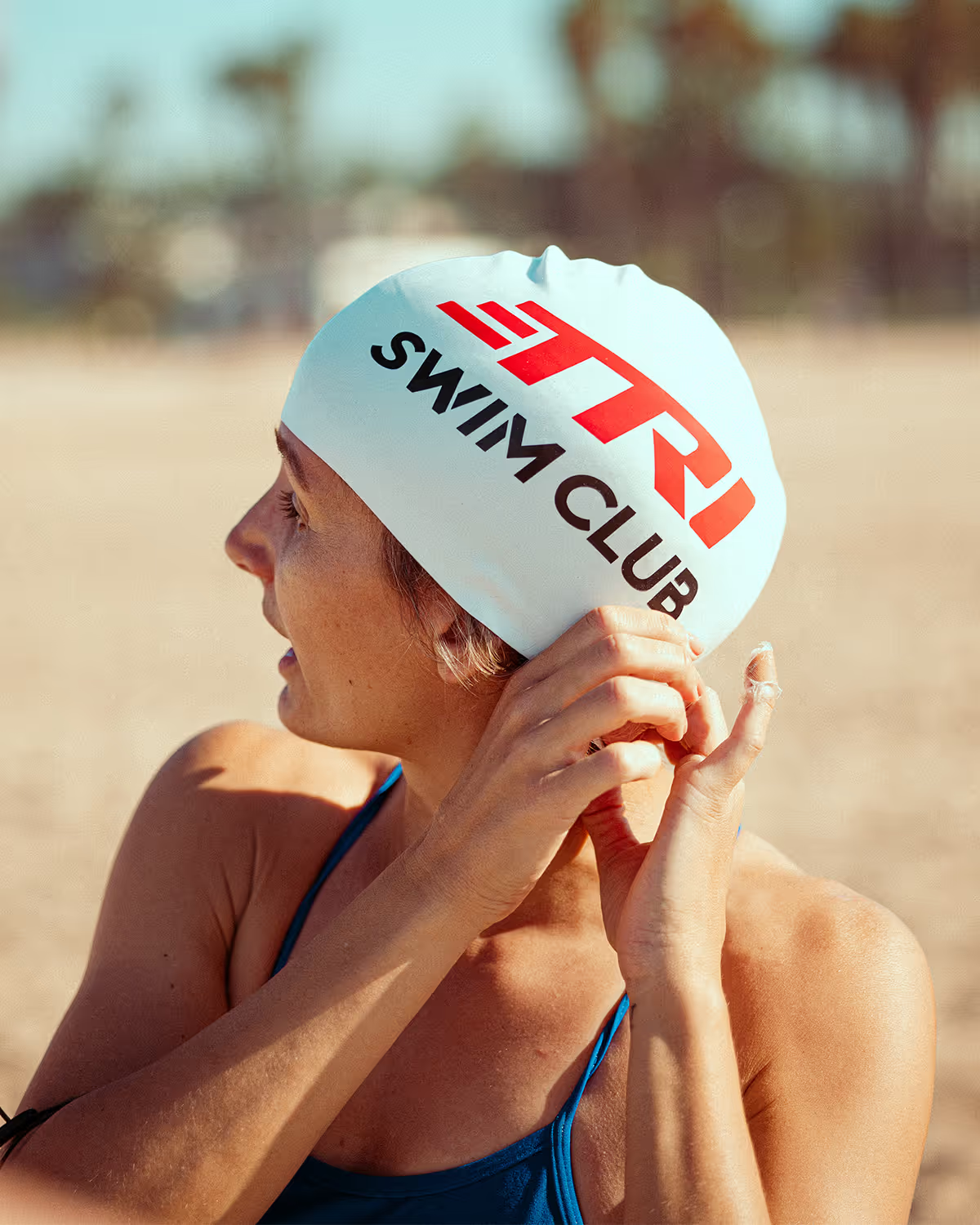
New to structured swim training?
Build confidence, improve technique, and double your distance before you join the TRI Swim Club.
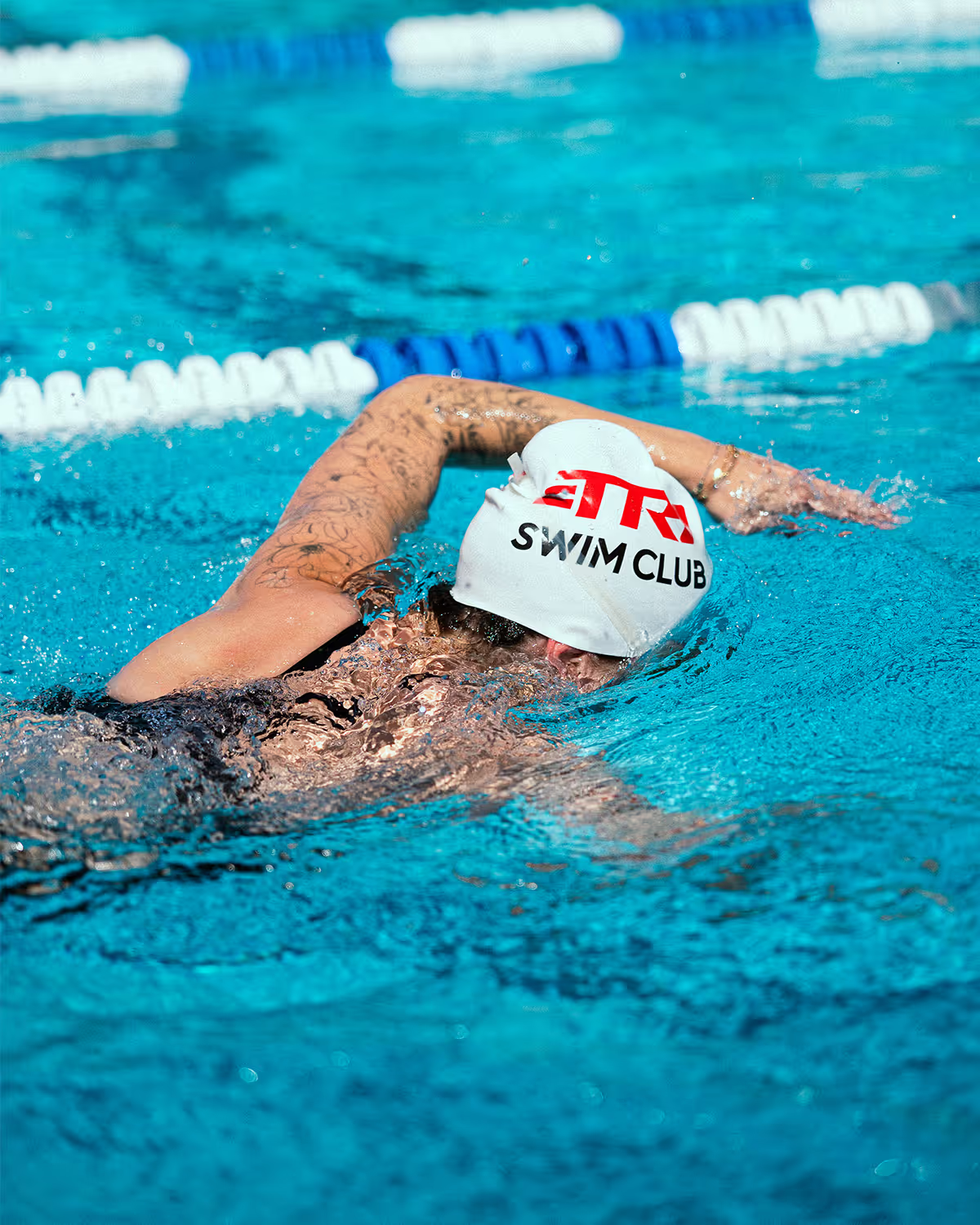
Chasing podiums or performance goals?
Train with elite-level structure scaled to your ability with 1:1 coaching to compete at your highest level.