TRI Swim Club Case Study: The Swimmer Who Thought Her Best Was Behind Her
A 46-year-old lifelong swimmer hadn't gotten faster in over 10 years and thought her best was behind her. Ten weeks out from her 70.3, she traded long repeats for speed and technique work. She dropped 2 minutes off her 70.3 swim and set a PB by over 10 minutes.

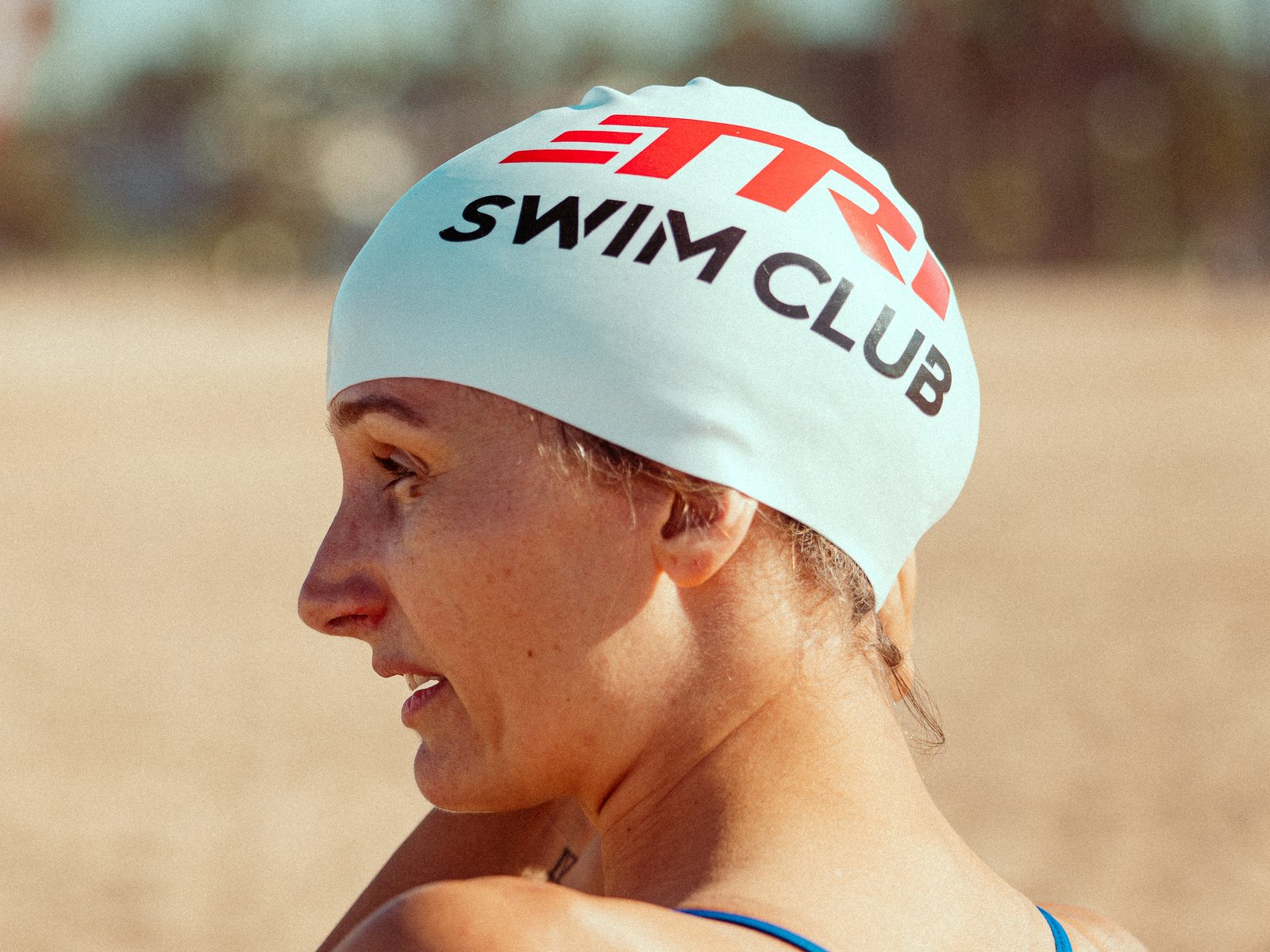
This month I had a great conversation with one of my athletes, and she was generous enough to let me share her story (anonymously, of course). We'll call her TESS, short for Ten years, Every Swim the Same.
Check this out and see if any of it sounds like you:
Age: 46
Background: Grew up swimming. A lifelong club swimmer.
Goal race: A 70.3, about 10 weeks away
Typical training: Longer aerobic swims, lots of 300 repeats, the classic way to "prepare for the distance"
Desire: To finally get faster
Fear: She hadn't improved in years, figured she probably needed some technique help, and quietly suspected her best swimming was simply behind her
What do you think? Is Tess a swimmer past her prime, chasing times she'll never see again? Or is she closer than she thinks? Let's find out.
What I'm learning about my athletes is that they come from very different places. Some are adult-onset swimmers who need everything built from scratch. But a surprising number are like Tess: experienced, fit, technically solid, and completely stuck. For these athletes, the answer isn't more work. It's a bit of coaching wizardry.
1. Look At What Tess Already Has
Decades of swimming. A feel for the water that most triathletes would trade a kidney for. An aerobic engine built over a lifetime in the pool, now topped up every week by her bike and run. That's a big pile of assets. Tess doesn't have a fitness problem. She has a stimulus problem.
2. Look At What She's Been Doing With It.
Here's the catch. For years, Tess trained the same way: long aerobic sets, steady 300s, the same comfortable effort. Her body adapted to that years ago, and then it had nothing new to adapt to. There's an old saying that the definition of insanity is doing the same thing over and over and expecting different results.* Tess wasn't insane. She was just loyal to a routine that had stopped paying her back a long time ago.
So during her free trial week, she sent me a message. The workouts were great, she said, but there was a lot of speed and technique work. She was used to longer swims to prepare for a 70.3, and she was worried this training wouldn't get her ready. Maybe she should try it after her race.
I understood the worry. But I told her the truth: with 10 weeks to go, speed and technique work would give her the biggest improvement in the time she had. She'd still have at least one aerobic session every week to keep her longer fitness in the water. And in the last four weeks before her race, we'd shift to race-pace work to dial her in. I also told her that the long swims might be exactly why she'd plateaued, and that it was worth giving something different a chance.
She trusted me. Reluctantly, I think, and mostly because of my swimming résumé. But she trusted me.
So Here Was The Prescription For Tess:
- Two small technical changes. We adjusted her head position to bring her body position up, and we fixed her right hand entry and pull, which was crossing over her centerline.** That's it. Two changes, not a stroke overhaul.
- Speed and technique as the main course. Most of her sessions focused on getting faster and cleaner, with one aerobic session a week to hold her endurance.
- Race pace in the final four weeks. As the race got close, we shifted toward race-specific work so race day pace would feel familiar.
Tess had two options at the start. Option 1 was to finish her season the way she always had and try something new after her race. Option 2 was to trust the process now, 10 weeks out, with her goal race on the line. She took option 2.
The Results
Four weeks in, Tess raced a tune-up Olympic-distance triathlon. Afterward she messaged me. She'd just swum 3 seconds per 100 faster than ever.*** Her first swim improvement in over 10 years, and a big one for a lifelong club swimmer, who usually fights for every tenth of a second.
That's when she really bought in. She doubled down on the speed and technique work for the rest of her build.
At her 70.3, she dropped 2 minutes off her swim and set a personal best by more than 10 minutes overall. The swim time was great. But the bigger win showed up after she climbed out of the water. Our swim training is built to leave you with more energy for your bike and run, both in training and on race day, and Tess got to spend that energy where it counts.
Congratulations, Tess. Your best swimming wasn't behind you after all.
There are two lessons in this story.
Lesson one: A plateau is rarely about age. Much more often, it's about doing the same thing for too long. Change the stimulus, and an experienced swimmer can still find speed she hasn't seen in a decade.
Lesson two: Your swim training should serve your whole race, not just your swim split. When the swim leaves you fresher, the bike and run get better too.
So if you've been stuck for a while, change one thing this week. Swap one of your long steady sets for short, fast reps with full rest, and see how it feels. You might be closer than you think.
* This line usually gets credited to Albert Einstein, though there's no real evidence he ever said it. It's still true.
** A crossover is when your hand enters the water past the middle of your head, or pulls across your body. It pushes you sideways instead of forward, and throws your whole body line out of alignment.
*** Three seconds per 100 doesn't sound like much. Over a 1500m Olympic swim, it's 45 seconds.
Ready to see real progress in the water?
Follow structured weekly sessions that steadily build speed, endurance, and race control.
New to structured swim training?
Build confidence, improve technique, and double your distance before you join the TRI Swim Club.
Chasing podiums or performance goals?
Train with elite-level structure scaled to your ability with 1:1 coaching to compete at your highest level.