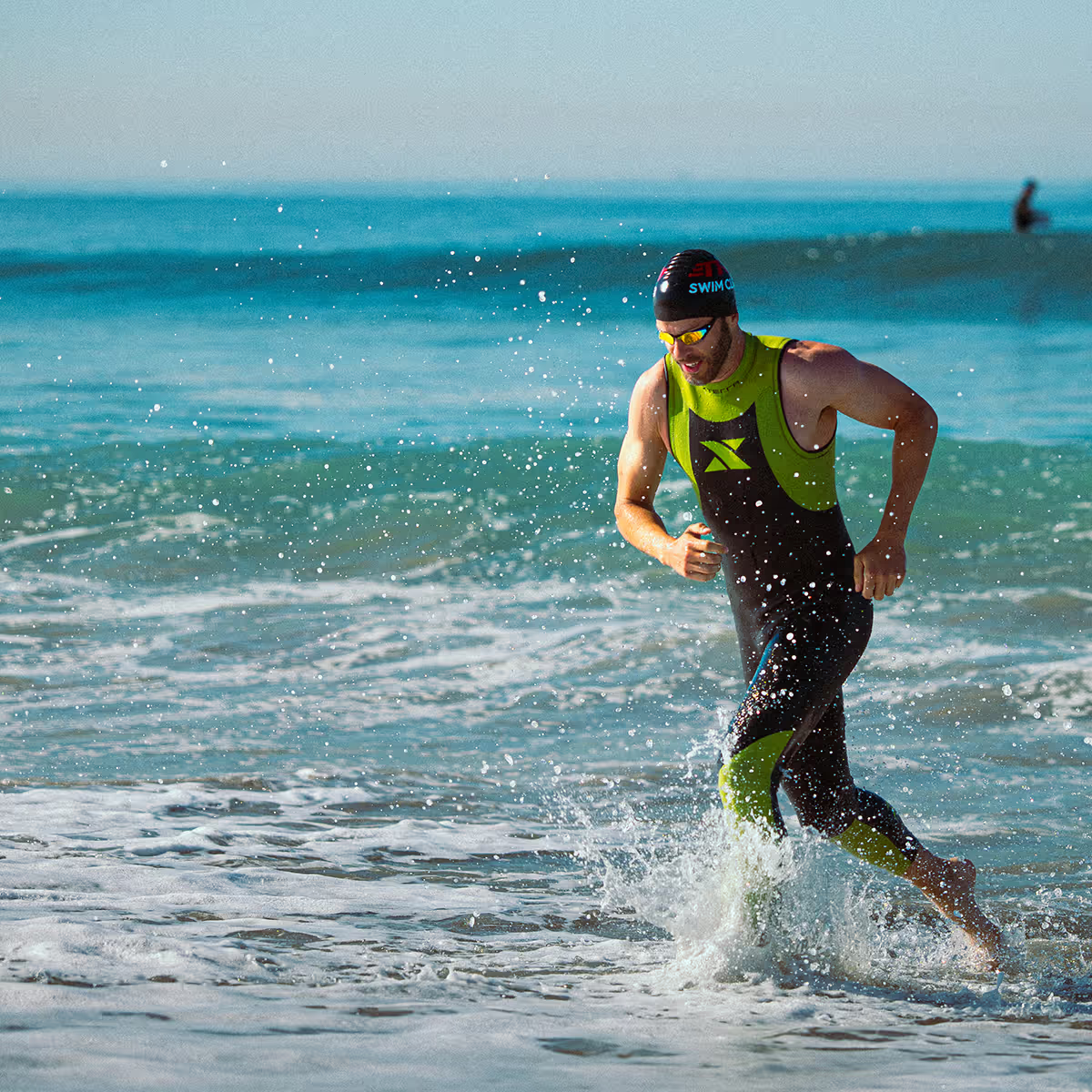
How to Breathe While Swimming
Feel like you're drowning after a length or two? It's not your fitness. It's your breathing. Here's how to breathe while swimming: exhale the whole time your face is in the water, turn your head to the side instead of lifting it, time the breath with your stroke, and three simple drills to make it automatic.

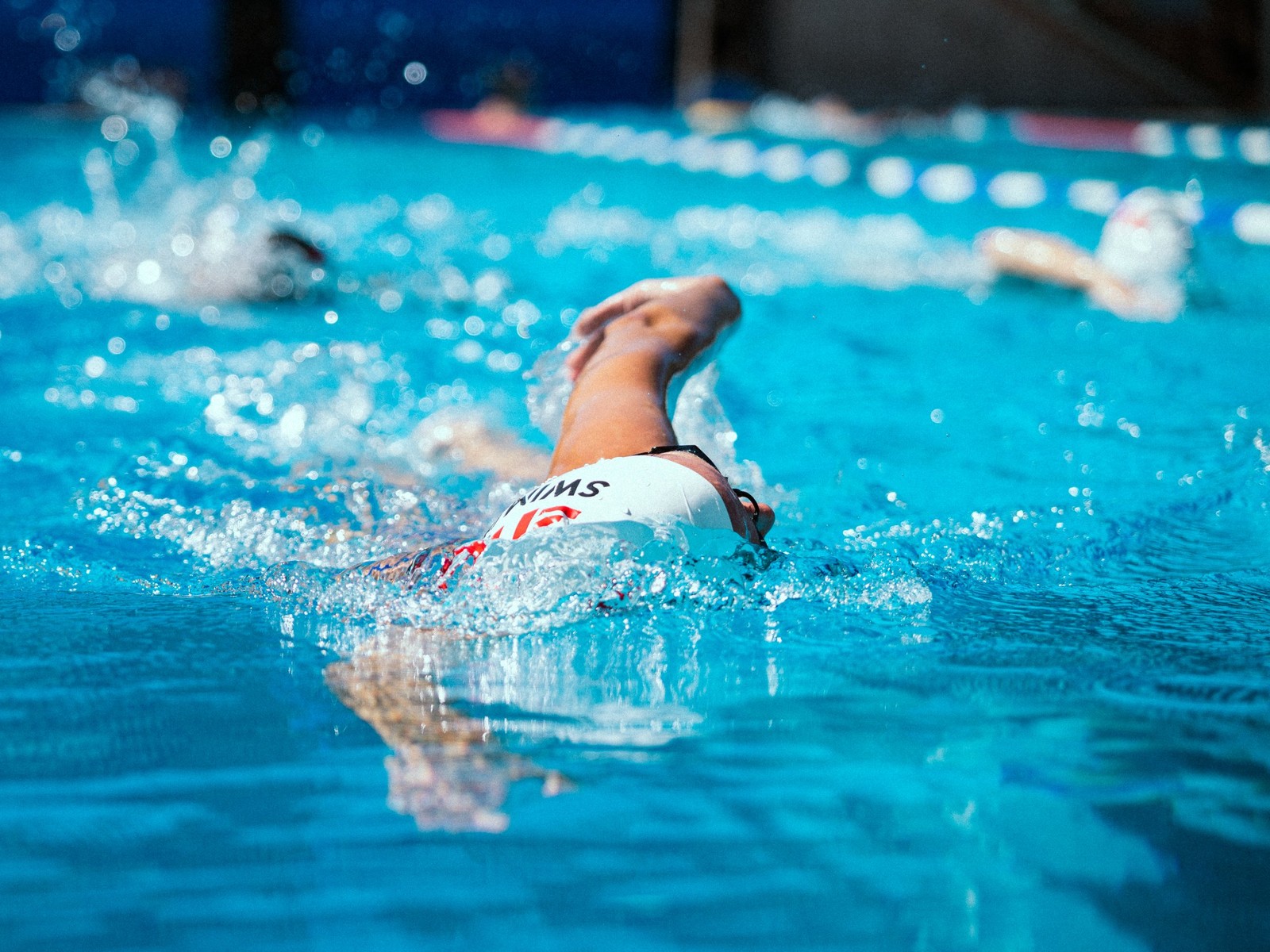
Okay, I admit the title of this post sounds like something from a kids' learn-to-swim pamphlet. But it's also completely accurate, because I really can teach you how to breathe while swimming, for life, in one short blog post.
And yes, this isn't secret information. Every kid who grew up on a swim team learned it before they could ride a bike. But I'm still writing about it because almost every new triathlete I meet was never taught it. Their feelings about breathing in the water range from mild discomfort to outright panic, and most of them have decided the problem is their fitness.
Here are three real things I've heard from triathletes:
"I hold my breath with my face in the water, then come up and gasp."
"I have to lift my whole head out of the water to breathe, so I don't choke on water."
"I'm fine for a length or two, then I feel like I'm drowning. I guess I'm just not fit enough yet."
All three are understandable. All three are wrong.
None of these athletes has a fitness problem. They have a breathing problem, and it's the most fixable problem in swimming. It's worth fixing first, because everything else in your stroke, your body position, your catch, your pace, sits on top of it.
Why Do I Feel So Out Of Breath?
That desperate urge to breathe isn't mostly about running out of oxygen. It's mostly about carbon dioxide building up in your body.
So picture what happens when you hold your breath underwater. CO2 builds up. Then you turn your head for air, and you get a split second to do two jobs: breathe all the old air out and breathe new air in. You can't fit both into a split second. So you get half a breath, the CO2 keeps climbing, and three lengths later you feel like you're drowning. It's not your lungs failing you. It's a timing problem.
So How Do I Fix It?
Breathe out the entire time your face is in the water.
That's it. That's the secret. A steady stream of bubbles out through your nose, or your nose and mouth, from the moment your face goes in until the moment you turn to breathe. By the time you rotate, your lungs are mostly empty and the CO2 is already gone, so the only job left is a quick breath in through your mouth.
Some new swimmers hum to make it automatic. Some think "bubble, bubble, breathe." Whatever works. Exhale underwater, inhale above it.
Where Should My Head Go?
To the side, not forward. Rotate your head with your body, the way you'd turn to look over your shoulder, and keep one goggle in the water and one goggle out. Your head stays resting on the water like it's on a pillow.
Lifting your head to breathe is the most expensive habit in triathlon swimming. Your body is a seesaw, so when your head comes up, your hips and legs sink, and now you're dragging your lower half through the water on every single breath.
When Do I Turn To Breathe?
As the arm opposite your breathing side enters the water and extends forward, rotate onto your side and turn your head to breathe. Breathe in quickly, then get your face back in the water before the arm on your breathing side swings forward and lands. If you breathe late, you'll end up turning your head after the arm is already forward, which pulls your body off line and often causes your hand to cross over your centerline.
Should I Breathe Every Two Strokes Or Every Three?
Triathletes argue about this forever. The answer is it depends.
Breathing every three strokes, to both sides, balances your stroke and can be beneficial for not fatiguing your shoulders and learning good mechanics. It also means you can breathe to either side on race day, which matters when the chop or the sun is on your favorite side.
In a race, breathe as often as you need to, which for most people means every two. Oxygen is more valuable than style when you're racing. Every elite distance swimmer I know of breathes every two, and it's for good reason when it comes to speed, efficiency, and oxygen intake. The skill you want is the freedom to breathe to whichever side the conditions call for.
But My Friend Says Real Swimmers Barely Breathe At All.
Your friend is thinking of hypoxic sets, short and controlled training sets where swimmers breathe less on purpose. That's a specific tool, used in small doses, and it's not how anyone swims a race (except sprinters). In normal swimming, you breathe, and you breathe well. And no matter what anyone tells you, never hyperventilate before swimming underwater. It's genuinely dangerous.
Okay, Fine. How Do I Practice It?
Three simple drills will do most of the work.
Bobs or Sink Downs. Stand in the shallow end. Sink under, breathe out all your air in a steady stream of bubbles, then come up and take a quick breath in. Repeat 10 times. It feels silly. It also teaches your body that exhaling underwater is normal, which is the whole game.
Wall Kicking With A Stroke. Hold onto the wall with both hands and your face in the water while kicking. Slowly exhale, and when you need to breathe, take a stroke and turn your head to breathe. When taking the stroke, make sure to hold onto the wall with the opposite hand to help you balance and not have to lift your head out of the water. This teaches you to breathe without lifting your head or stopping your kick.
Side Breathing With A Stroke. Hold onto a buoy or kickboard with one hand, arm extended. With your other arm, take a stroke and turn to breathe with the stroke. Just like the wall kicking drill, the buoy or kickboard is there to help you balance. You'll eventually learn to keep your opposite arm extended when you breathe for balance, with only the water to hold onto.
So there you have it. In five words: breathe out under the water.
Do that, turn your head to the side instead of lifting it forward, and the suffocating feeling that's been haunting your swims goes away. Not because you got fitter. Because you finally stopped holding your breath.
Breathe!
Ready to see real progress in the water?
Follow structured weekly sessions that steadily build speed, endurance, and race control.
New to structured swim training?
Build confidence, improve technique, and double your distance before you join the TRI Swim Club.
Chasing podiums or performance goals?
Train with elite-level structure scaled to your ability with 1:1 coaching to compete at your highest level.