Having "The Talk" With Your Training Partner
You and your training partner keep showing up, winging it, and getting nowhere. Here's the conversation that fixes it. Why following a structured swim training plan is actually easier than making it up at the wall, and how it turns two people moving water around into two people who actually get faster.

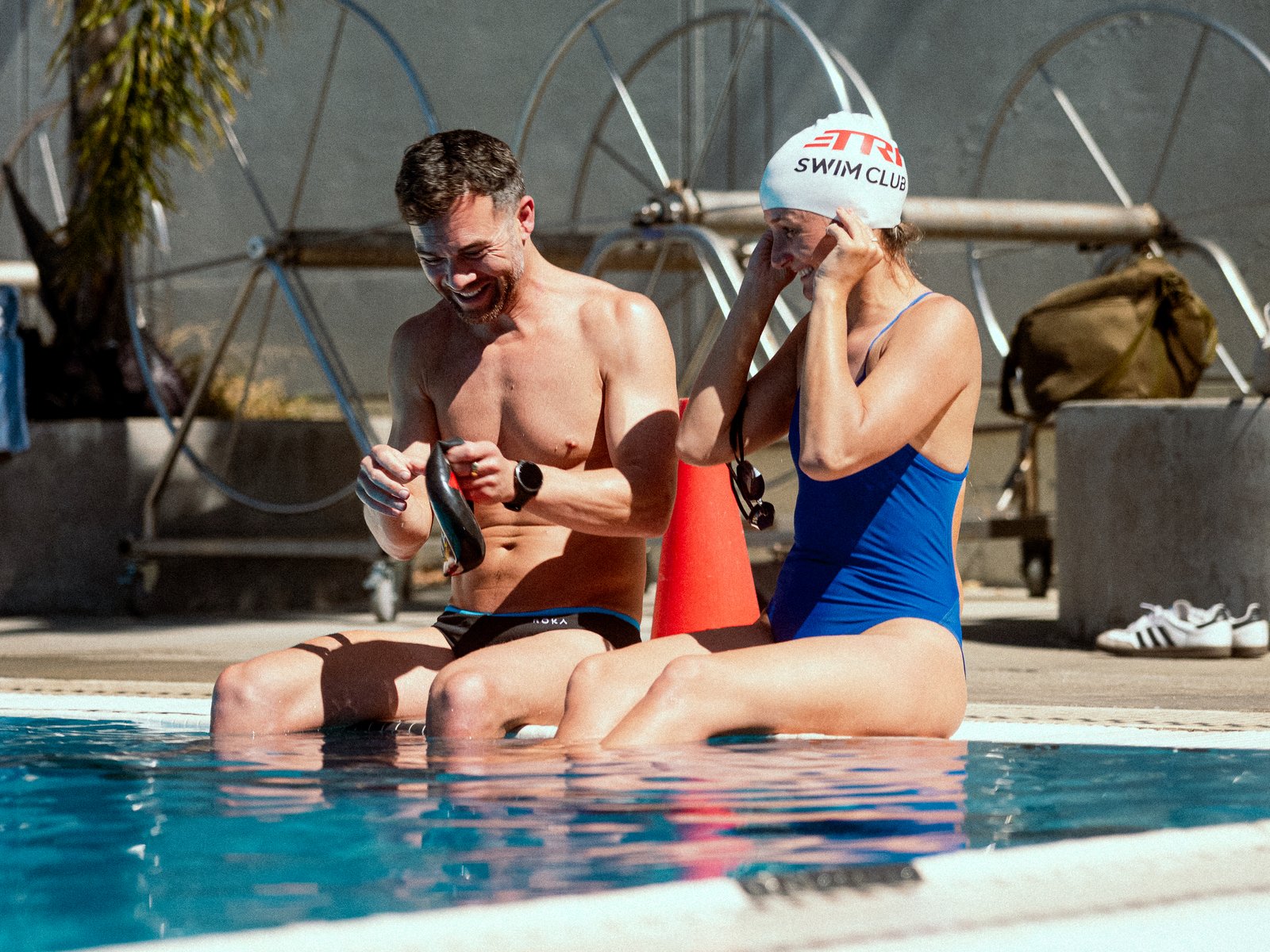
You and your swim buddy need to have a conversation, and I want to help you get ready for it.
Let's call your training partner Dave, because everybody's got a Dave. You've been meeting him at the pool a couple mornings a week for months now, and on paper the two of you train together. But you know how it actually goes. You both show up, you stand around at the wall for a minute, and eventually one of you says "so what are we doing today?" And then you sort of assemble something out of nothing. A warmup, a bunch of freestyle, a few hard hundreds if you're both feeling it, and then you climb out and go get coffee. It feels like training. You even leave a little tired. But if you're honest, it's the same swim you did last week, and the week before that.
That was fine when you were both new to this. You and Dave just carried in the habits from your solo swimming days, which is to say no real habits at all, just show up and swim around for an hour and call it done. Each of you assumed you were doing more or less okay, and neither of you ever walked in with an actual goal for the session beyond getting the yardage in.
Aimless Water Time
The trouble is that those aimless mornings kept right on coming, one after another, and they all blurred into the same swim. The same comfortable pace that never quite tips into hard. The same made-up sets. Nothing tying this Tuesday to last Tuesday or to the race you've got coming in June. You weren't building toward anything. You were just two guys moving water around next to each other, very reliably, going nowhere.
So one morning, instead of pushing off the wall, you and Dave actually talk about it. And once you start being honest, it comes out pretty fast that neither of you can name a single thing about your swimming that's gotten better since spring, even though you've both been showing up faithfully this whole time. That's a weird thing to sit with. All those mornings, all that effort, and the pace is exactly the same as it was.
And here's the thing that flips it, the realization that changes how the two of you train from that day on. The answer was never to try harder, or to finally knuckle down and plan your sessions out properly yourselves. The answer is to stop planning at all, and just follow a plan somebody already built for you. One where the sessions are written before you ever get to the pool, where each week builds on the last, where you never again have to stand dripping at the wall trying to invent a workout out of thin air. You just show up and swim what's in front of you, and somebody who actually knows what they're doing has already done all the hard thinking on your behalf.
The Realization
And when this dawns on Dave, he gets weirdly excited about it, because he sees everything it takes off his plate. No more guessing. No more falling back on the same tired freestyle because neither of you planned ahead. No more nagging little voice in the back of his head wondering whether any of this is doing a single thing for him.
What surprises both of you is that this is the easy way, not the hard way. People steer clear of structured training because it sounds like more, more rules to follow, more commitment, more work. It's honestly the reverse. Winging it was the hard part all along. You were doing a coach's job every single morning, badly, half-awake, on the fly, with a buddy standing there waiting to be told what to leave on. Handing that off to a real plan doesn't add anything to your life. It takes the worst part out of it. You get to quit being a mediocre coach to yourself and go back to just being an athlete who swims.
Then there's the part that actually makes a training partner worth having in the first place. Once you and Dave are both on the same plan, all the little negotiations disappear. Nobody's lobbying to take it easy while the other one wants to hammer. Nobody's making up a set that happens to play to their own strengths. The plan already settled all of that before either of you woke up, so the only thing left to do is hold each other to it. He hauls you out of bed on the mornings you'd have talked yourself out of, you drag him through the set he'd have quietly trimmed, and the whole thing just runs. Two people following one good plan will always get further than two people improvising side by side in the same pool.
What If You Don't Have A Dave?
Now maybe you don't have a Dave, and you swim alone. That's fine, and honestly this works even better for you, because the real danger of training by yourself is that there's nobody around to stop you from winging it. A written plan becomes the training partner. It's the thing that tells you exactly what to do on the mornings you'd otherwise default to garbage. The only piece you have to bring yourself is actually showing up.
But if you do have a Dave, go have “The Talk” with him. Sit down together, take an honest look at how little your current swimming is really accomplishing, and get yourselves on a plan built by someone who knows what a session is supposed to do. That switch is real, and it flips the moment the two of you finally understand that the easiest and least stressful way to train also happens to be the one that actually makes you fast.
And then the only thing left to argue about is whose turn it is to buy the coffee.
Ready to see real progress in the water?
Follow structured weekly sessions that steadily build speed, endurance, and race control.
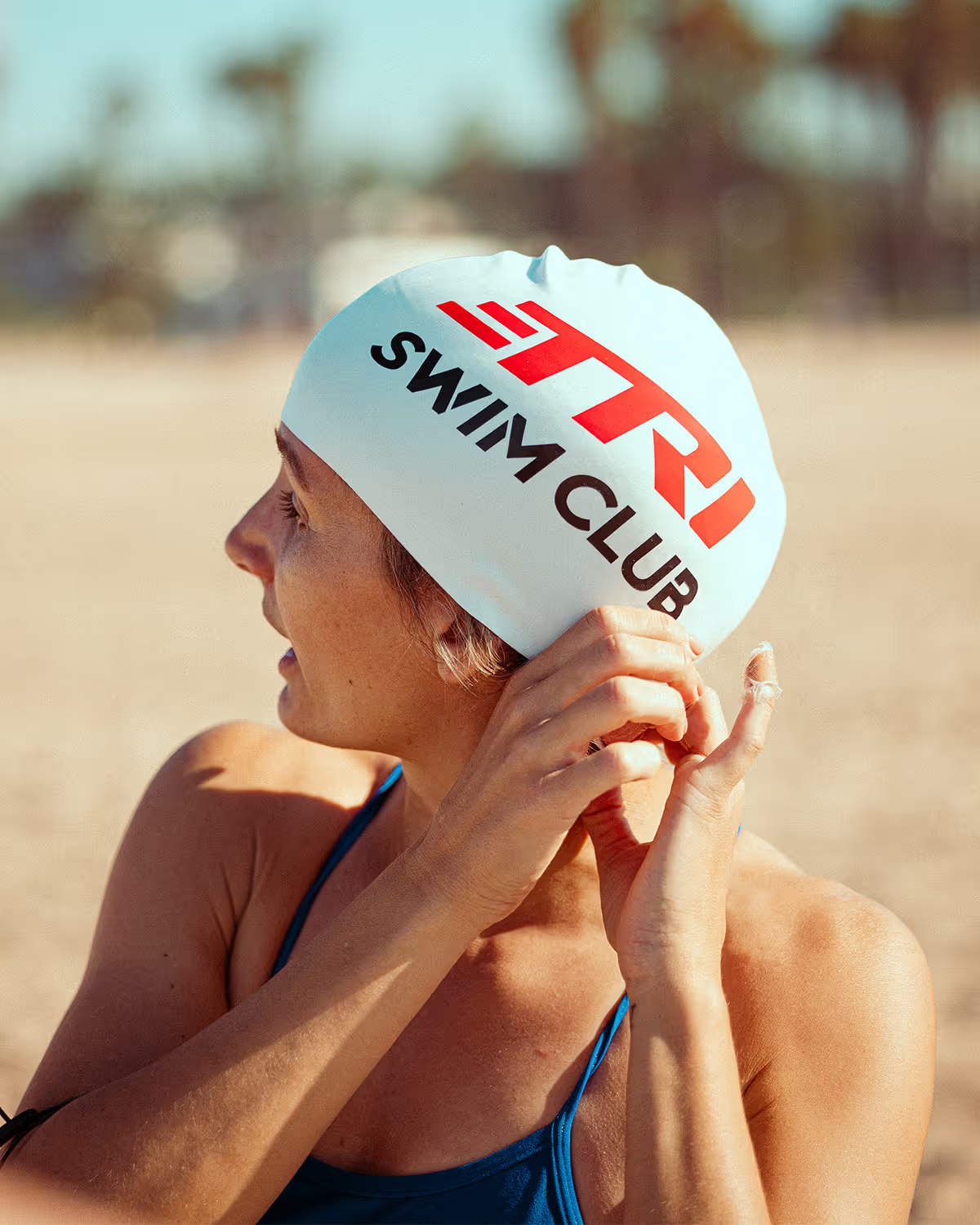
New to structured swim training?
Build confidence, improve technique, and double your distance before you join the TRI Swim Club.
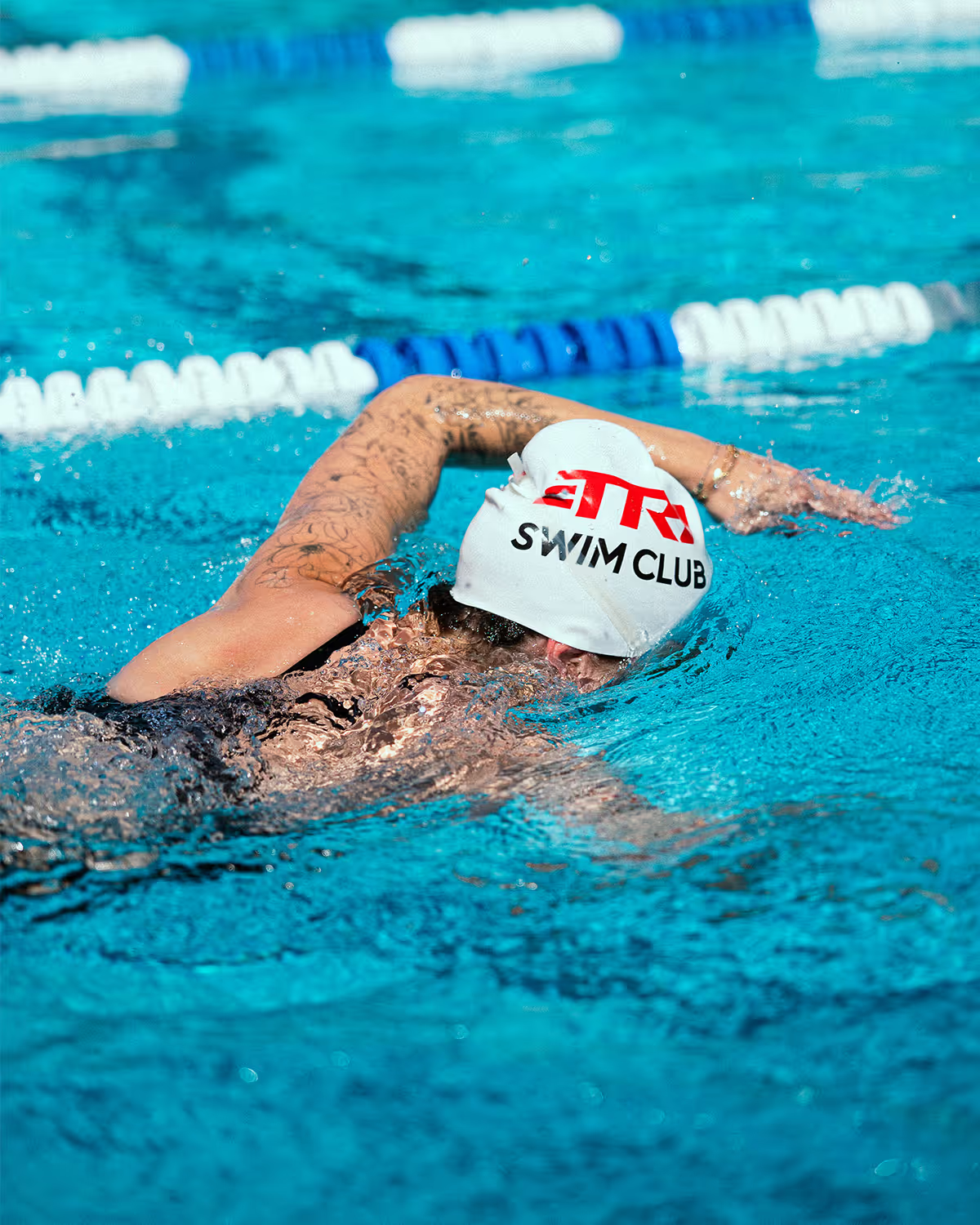
Chasing podiums or performance goals?
Train with elite-level structure scaled to your ability with 1:1 coaching to compete at your highest level.