Cure yourself of tiny details exaggeration syndrome
The tiny details you're obsessing over; gear, drills, rest intervals barely move the needle. Here's what actually does.

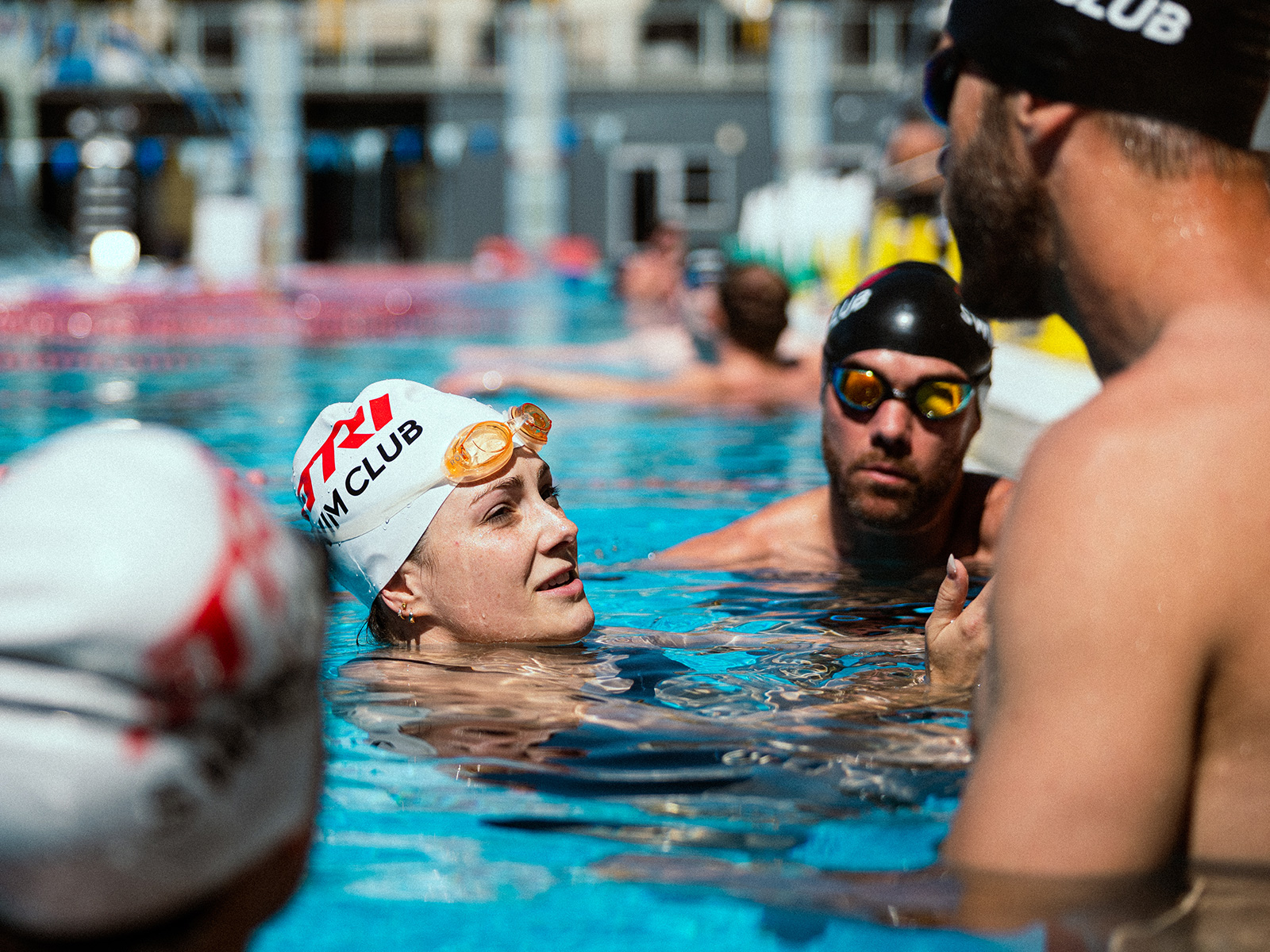
In my ongoing and painstaking research on what separates triathletes who feel the water is full of the quiet pleasure of gliding, from triathletes who can't seem to get past grinding out the same 2,000-meter session, I notice many patterns.
Certain behavioral habits tend to make people faster, and others provide a grinding pull toward the gutter. Chasing volume, an obsession with gadgets, and never once looking at the clock are obviously bad things, while showing up consistently, training with intent, and being willing to swim slow to eventually swim fast are of course good.
One of the stranger patterns I've noticed ever since I started coaching is the tendency of triathletes to zoom in on increasingly irrelevant details the more invested in the sport they become. Despite improving, they somehow become less aware of the handful of big things that actually make a swimmer, and more consumed by the tiny ones. The results are both tragic and amusing.
The gear trap
At first I thought it was just the gear. And the gear is a great place to start.
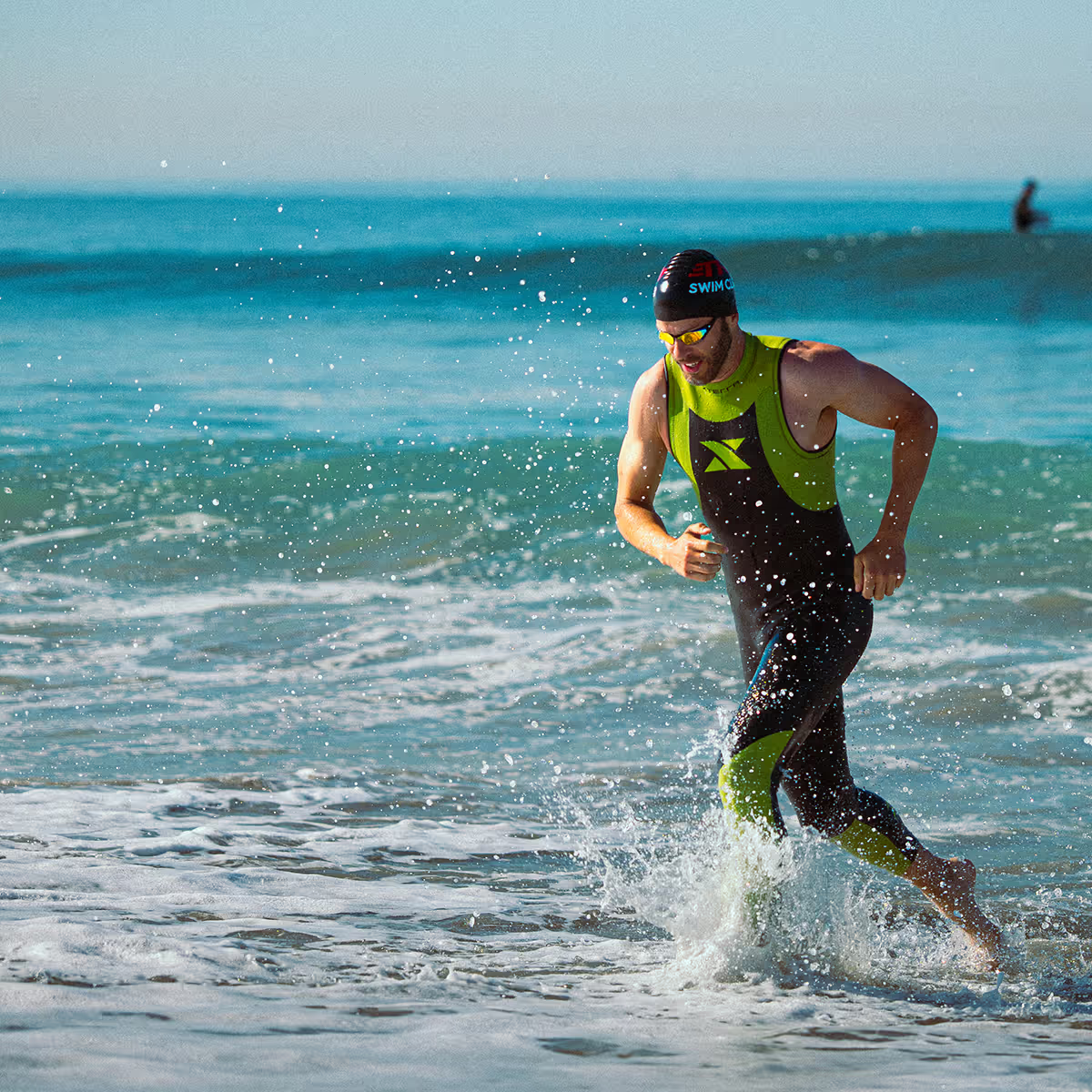
A triathlete will spend three months and four hundred dollars agonizing over which wetsuit buys back two seconds of buoyancy, then swim in it with dragging legs and a stroke that's leaking ten seconds a 100. He'll research paddles, anti-fog goggles, and a swim snorkel that promises to fix his catch, and he will own all of it, and he will still be swimming 1:50s, because none of those things was ever the problem.
The drill connoisseur problem
Then I noticed it in the drills. There's a certain kind of athlete who has become a connoisseur of drills. He can name fifteen of them. He does catch-up, and fingertip drag, and sculling in three positions, and he debates the merits of each on the forums like a wine enthusiast swirling a glass. What he does not do is swim very much actual swimming, at any real effort, on any kind of interval. He has mistaken the seasoning for the meal.
Obsessing over the session details
Then there's the session itself, zoomed all the way in. I watch people obsess over whether today should be 10x100 or 8x125, whether the rest should be 15 seconds or 20, whether to use the pull buoy on rounds three and four. These are real questions, sort of. But they're being asked by someone who swims three times a month. The honest answer is that it does not matter even slightly which of those he picks. It matters that he gets in the water on Tuesday, Thursday, and Saturday and swims with some intent. The details he's polishing are rounding errors on a number he hasn't bothered to make big yet.
How deep the rabbit hole goes
And it goes all the way down. The perfect stroke rate. The ideal tempo-trainer beep. The exact heart-rate zone for the aerobic set, measured to the beat, by a guy who hasn't done an aerobic set in a month. Whole evenings lost to the tiny details, while the big, boring, free levers sit untouched.
Once you're aware of this pattern, you start to see it everywhere, and you start to see it in yourself. So how do we exploit this loophole to get faster?
The cure for tiny details exaggeration syndrome
The cure, of course, is to catch Tiny Details Exaggeration Syndrome in your own behavior and gently punch yourself in the face every time it pops up. Ask yourself: in the context of everything that actually makes a swimmer fast, how big is this detail I'm agonizing over? Is there really a meaningful difference between these two goggles? Between 15 and 20 seconds rest, for a person at your level? Between this drill and that one, when you could just be swimming?
The answer, almost every time, is that it's a tiny detail. Even your biggest gear decision is a choice between two shades of the same bright, happy green, and it's worth a second or two at most. So enjoy the gear, by all means. Buy the nice goggles. Just don't mistake fussing over them for the work.
What actually makes you fast
Because the things that actually make you fast are embarrassingly few, and none of them are for sale. Show up consistently. Swim with structure. Train some of it genuinely hard. Get an honest set of eyes on your stroke. Do those, and you'll pass every athlete who owns a better wetsuit than you and has read more about paddles than you ever will.
Cure yourself of the tiny details, and you can pretty much write your own ticket in the water. You'll spend your energy on the few things that move the needle, and get all that agonizing time back for your own use. And time, as it turns out, is the one thing in this sport that was never a tiny detail.
Ready to see real progress in the water?
Follow structured weekly sessions that steadily build speed, endurance, and race control.
New to structured swim training?
Build confidence, improve technique, and double your distance before you join the TRI Swim Club.
Chasing podiums or performance goals?
Train with elite-level structure scaled to your ability with 1:1 coaching to compete at your highest level.